Remember These Top Tips For If You Experience A Tractor Trailer Crash
A tractor-trailer crash can transform a typical day in a dangerous emergency situation within seconds. The initial moments after an incident and the first two days that follow need more…

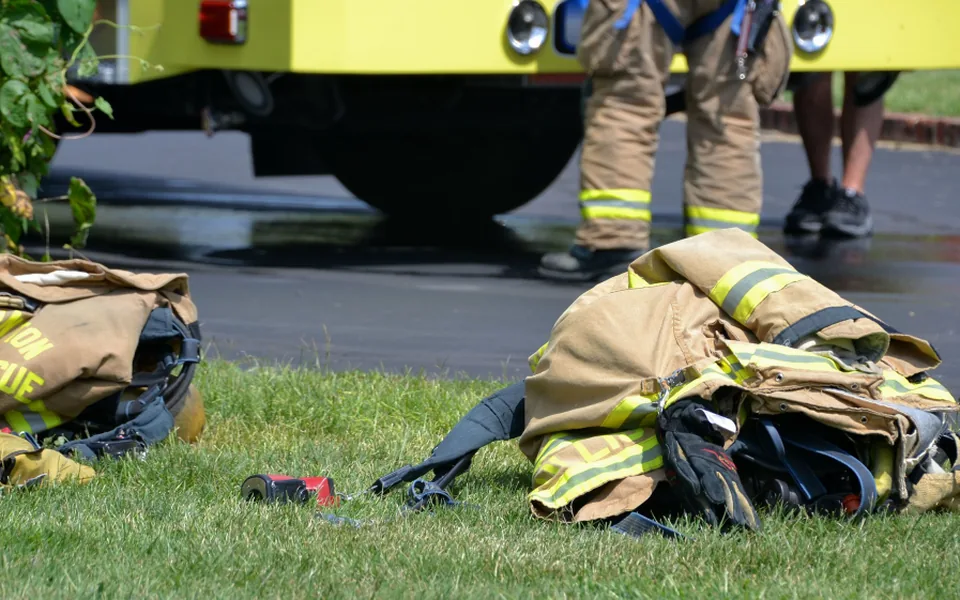
A tractor-trailer crash can transform a typical day in a dangerous emergency situation within seconds. The initial moments after an incident and the first two days that follow need more attention from safety officers than most people assume. At Superior Truck and Trailer Repair, we help commercial drivers and trucking companies who want to make correct decisions after accidents while safeguarding their physical well-being and professional success and company interests.
The following tips represent our essential instructions for your tractor-trailer crash experience which includes necessary actions for the accident location and required documents and methods to prevent errors that will complicate your insurance process and legal claims.
Safety First Must Always Be Your Primary Concern
The moment after the accident occurs people tend to become trapped in the present because they keep replaying the accident events or they start to worry about their vehicle and cargo and their delivery timeline. The first priority of every situation must always be to protect human life. When you are able to stand up, please examine your physical well-being. Adrenaline creates a temporary state of pain relief which makes it difficult for people to realize they have sustained injuries.
You should assess the other participants’ status only when doing so doesn’t jeopardize your safety. First, your mission requires you to avert a second collision. The majority of secondary collisions during roadside incidents result in more serious injuries than the original crash.
If it’s safe and legal, move the vehicle out of travel lanes. If it is not safe to move, stay put and make the scene as visible as possible with hazard lights and warning devices. Fleet operators should reinforce in training that scene safety is not only the right move, it also reduces additional exposure for everyone.
Call 911 And Make Sure A Police Report Is Created
The formal report becomes essential documentation for upcoming events despite its minor appearance. Call 911, request medical assistance if anyone is hurt, and ask for law enforcement to respond. When officers arrive, you must provide them with direct and true information.
You should describe your actions and observations together with the events which took place. You should state your lack of knowledge whenever you encounter a situation that you do not understand. You must not guess about speeds and distances and timelines when you lack certainty about those matters. A calm, accurate report is more helpful than a detailed story that includes assumptions.
If you are a fleet operator, make it standard practice that your drivers obtain the report number, the agency name, and the responding officer’s information when possible.
Get Medical Attention, Even If You Feel “Fine”
The trucking industry does not recognize this particular procedure which must take place after accidents. Drivers will attempt to continue driving because they think their accidents did not cause serious injuries. The problem exists because people typically experience common injuries like whiplash and back strain and head trauma and joint injuries after several hours or days from their initial accident.
People should treat EMS evaluation recommendations as their most serious duty. You should go to urgent care or your primary doctor after you refuse hospital transport. You need to report every symptom, including minor ones, while keeping documentation of all medical visits and health assessments and treatment plans.
Medical documentation is also important for insurance and for any future claim. More importantly, it protects your long-term health, which is hard to replace.
Document The Scene Like You Expect It To Disappear
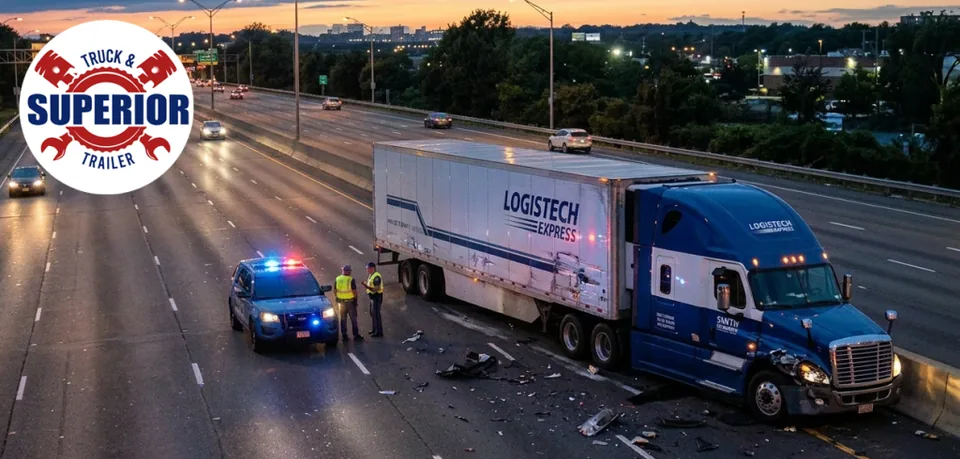
Crash scenes change fast. Vehicles get moved, debris gets cleared, and weather and traffic can alter everything. If you are physically able and it’s safe, gather documentation immediately.
Here are the key items we recommend capturing:
- The required documentation needs to show vehicle damage from multiple angles while showing complete license plate information and DOT identification numbers and company identification names and complete trailer identification details.
- The required documentation needs to show complete road infrastructure elements together with weather and lighting conditions and all existing construction areas through wide angle photography.
If possible, it needs to show complete road infrastructure elements together with weather and lighting conditions and all existing construction areas through wide angle photography.
For fleet operators, this is also the time to ensure internal protocols are followed so ELD data, telematics, dash cam footage, and maintenance records are preserved in a clean, organized way.
Collect Witness Information Before People Leave
Neutral witnesses can make a big difference when stories conflict. If there are bystanders or other drivers who saw the crash, ask for their name and contact information. If they are willing, ask what they saw in a simple sentence and write it down or record it on your phone.
Do not argue with anyone at the scene, and do not pressure a witness. Just gather accurate contact details and move on. Some of the most reliable witnesses leave quickly once traffic starts moving again.
Watch What You Say At The Scene
The most common error which our team encounters occurs when drivers and company representatives become too talkative during times of high pressure. The two groups should work together with law enforcement and medical professionals while avoiding informal remarks which might create future misunderstandings.
The person needs to avoid saying sorry or making any remarks which could be interpreted as their acknowledgment of responsibility. The statements “I didn’t see them” and “That was on me” will be interpreted according to their specific context. People can experience empathy for others who are involved in a situation while making complete liability declarations.
When another person becomes angry or aggressive you should maintain a distance while maintaining a professional demeanor until law enforcement arrives to manage the situation.
Notify Your Carrier And Your Company The Right Way
Fleet operators need to ensure that drivers understand who to contact and what information they must provide and which details they should avoid making assumptions about. When you notify your insurance company about an incident, you must provide only truthful information.
The report must include details about the location and time and the vehicles that were involved and whether police officers responded and whether any injuries occurred. You have the right to decline a recorded statement request because you need more time to collect information and consult with your lawyer.
In real-world crash response, rushed statements can create inconsistencies that become problems later.
Preserve Evidence And Records Immediately
In trucking cases, evidence can be time-sensitive. Video can be overwritten, telematics may roll off, and maintenance records can be misplaced when multiple teams are involved. Preservation matters for both defense and claims.
For drivers, this means protecting dash cam footage and keeping your own photos, notes, and paperwork. For fleet operators, it means issuing internal preservation steps so relevant materials are retained, including:
- Dash cam and any inward/outward-facing video
- ELD logs and supporting documents
- Telematics, GPS history, and speed/braking data
- Maintenance and inspection records
- Driver qualification and training materials tied to the route or task
You are not doing anything “extra” by preserving records. You are doing what responsible professionals do after a serious event.
Be Careful With Social Media And Public Comments
This is another area where small mistakes turn into big headaches. Do not post about the crash, your injuries, the other driver, the cargo, or the schedule pressures that day. Do not comment on photos other people post. Do not argue online about fault.
We have seen situations where a single post created confusion about timing, severity, and injuries. It is almost never worth it. Keep the discussion limited to your company, your insurer, medical providers, and your attorney.
Understand That Fault Is Not Always Obvious
At the scene, people often assume fault based on vehicle size, company branding, or emotion. But commercial crash liability is usually more complex. Road design, signage, visibility, mechanical conditions, load shift, blind spots, and actions from multiple drivers can all play a role.
If you are a fleet operator, this is where a structured crash review helps. If you are a driver, this is where careful documentation protects you. The goal is not to “win” an argument on the roadside. The goal is to make sure the facts are preserved and handled properly.
Don’t Let Repair Pressure Rush Your Decisions
After a crash, there is pressure to get the truck back on the road, secure replacement equipment, address cargo issues, and keep customers happy. That is real. Still, you want to avoid decisions that create bigger issues later.
If the vehicle needs inspection before towing or repair, follow that process. If cargo is compromised, document it and follow safety procedures before moving anything. If you are injured, don’t skip care just to keep the schedule alive. The short-term push can cost far more in the long run.
Fleet operators can help by making sure drivers know they will be supported when they follow crash protocols, even when operations are disrupted.
When Legal Guidance Helps Most After A Tractor-Trailer Crash
Not every crash requires legal representation, but many do, especially when there are injuries, major property damage, disputed fault, or any suggestion of citations or compliance issues.
It can also help when an insurance company is pushing for quick statements, quick settlements, or trying to narrow the facts before all information is available. For fleets, early guidance can help keep communication organized, protect sensitive records, and reduce preventable exposure.
Our staff of professionals approaches these situations through practical solutions. Our primary focus is on what drivers and operators require which involves providing them with specific instructions and maintaining accurate records and delivering dedicated support when necessary.
Final Thoughts And Next Step
The proper response to a tractor-trailer crash enables you to maintain your physical well-being and your commercial driver’s license and your business operations. You should prioritize safety while obtaining medical treatment and documenting all possible information and refraining from making any statements or choices that you might later regret.
If your driver team needs assistance with understanding their available options after a tractor-trailer accident, please contact (502) 789-6644 to reach us at Superior Truck and Trailer Repair. We will assist you with your upcoming procedures while securing the assets you have developed.