


Semi Truck Maintenance Schedule: The Routine That Prevents Breakdowns and Maximizes Uptime
We here at Superior Truck and Trailer Repair operate scheduled maintenance programs to achieve maximum truck reliability at minimal upkeep expenses. The most effective way to get there is a…


We here at Superior Truck and Trailer Repair operate scheduled maintenance programs to achieve maximum truck reliability at minimal upkeep expenses. The most effective way to get there is a simple, consistent semi truck maintenance schedule that matches how your trucks actually operate.
Continue reading for a maintenance schedule that workers can utilize as their standard operating procedure. The basic structure requires modifications according to engine manufacturer’s instructions, duty cycle specifications, and shop inspection criteria. This maintenance schedule enables organizations to identify issues at an early stage, which enables them to maintain business operations.
Why A Maintenance Schedule Beats “Fix It When It Breaks”
The maintenance schedule provides more benefits than the approach of fixing equipment after it breaks down. Organizations incur higher expenses through reactive maintenance because their unplanned repairs require additional resources. The expenses for parts and labor transform into financial losses through operational interruptions, which include both missed loads and late deliveries.
A schedule also helps you:
- Reduce out-of-service events by catching wear before it becomes a failure
- Extend the life of tires, brakes, belts, hoses, and drivetrain components
- Maintain better fuel economy through clean filters, correct fluids, and proper tire pressure
- Improve DOT inspection readiness with consistent documentation and known conditions
Even for owner-operators, a schedule is what turns maintenance from “random expensive surprises” into a controlled operating expense.
Daily Pre-Trip And Post-Trip: The Five-Minute Habit That Saves Hours
Most downtime starts with something that could have been spotted in the yard. Daily checks work because they happen often enough to catch changes.
Before you roll, we recommend a consistent walkaround plus a quick cab check:
Start with leaks and stance. You should report any new fluid leaks that appear from the engine, transmission, or axles. The truck’s position requires examination because a leaning corner could reveal impending suspension or tire issues. The inspection requires you to examine tires for visible damage and tire pressure that appears to be below normal, and for any signs of tire deterioration. The tire inflation system requires testing to ensure it functions correctly, while you need to identify any existing slow leaks that the system might be hiding.
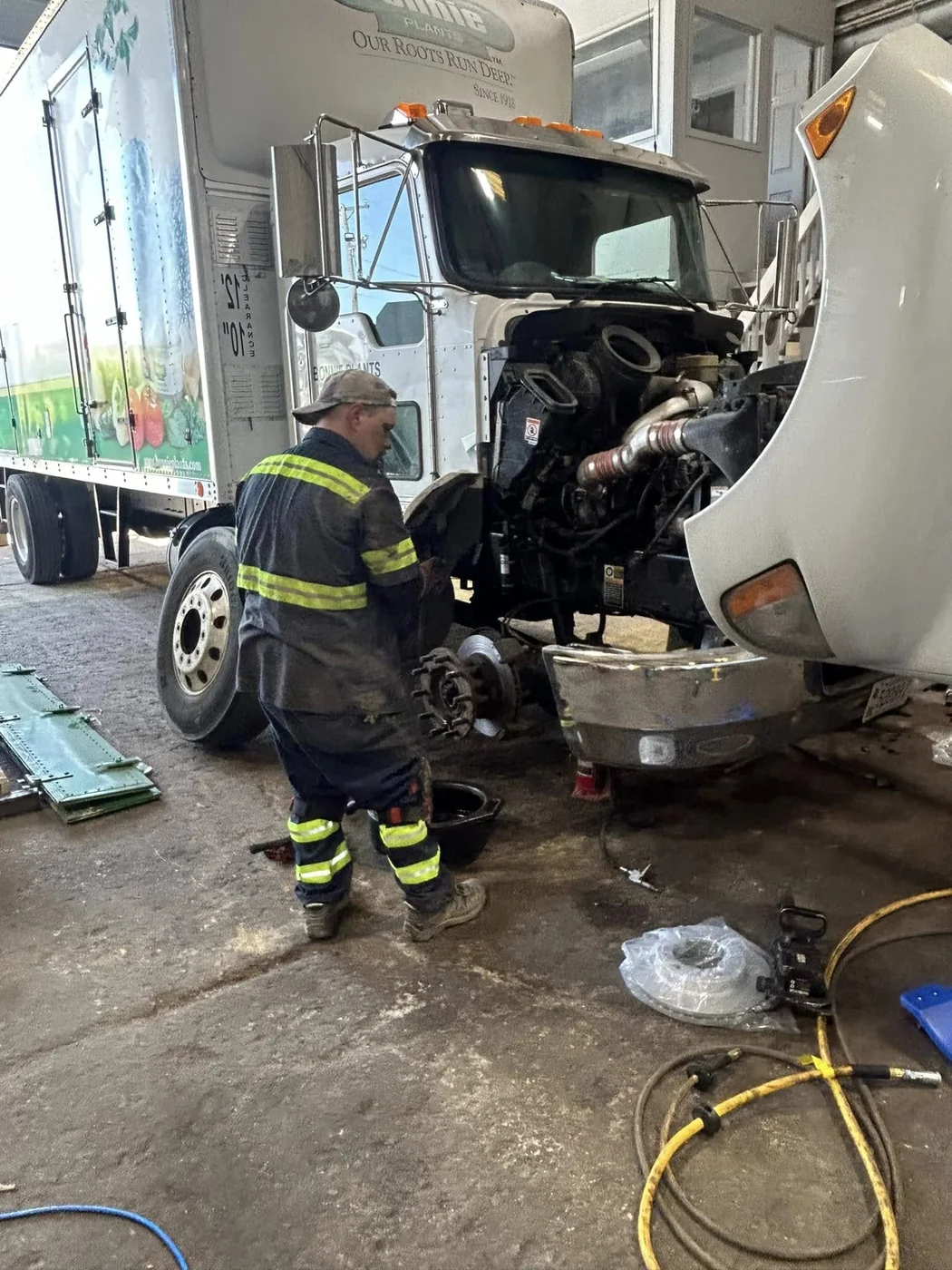
You should open the hood as soon as you get the chance. The task requires you to check the coolant level and oil level, and to inspect the system for chafing hoses, wet fittings, and loose clamps. The inspection requires you to check belts for signs of damage, which include cracks and glazing. The presence of fuel odor or residue around fittings requires immediate attention.
The evaluation process begins with testing lights, reflectors, and safety equipment. The system requires checking whether headlights, markers, brake lights, and turn signals function properly. The cab contains equipment that allows you to monitor air pressure build time while you observe warning lights and detect air leaks.
Perform a quick post-trip evaluation after the day ends. The driver should record any unusual experience that occurred during the drive, including vibration, pulling, harsh shift behavior, brake fade, and new noises. Small notes are gold for diagnosing issues early.
Weekly: Catch Wear Before It Becomes A Road Call
Weekly maintenance activities help detect wear before it causes vehicle breakdowns on the road. The weekly maintenance check reveals minor issues that require future maintenance. Drivers tend to observe consistent patterns that appear during the week because they see one tire losing air, a hub starting to weep, a belt making a noise during cold starts, and a battery that cranks at a slower speed than usual.
A strong weekly routine includes a closer look at:
The inspection process requires you to examine tires and wheels, which includes checking tread depth and identifying any irregular wear, inspecting valve stems, and assessing lug nut indicators. The detection of feathering, cupping, and shoulder wear signals that you need to assess your alignment, suspension, and air pressure practices because your tire will become unusable.
Fluids and filters: Even if you are not changing them weekly, you should be monitoring levels and conditions. A steady top-off pattern is a signal. Oil consumption, coolant loss, and power steering loss all point to something that needs attention.
Air system and brakes: Drain air tanks if required by your setup and environment. Listen for leaks. Check brake chamber condition, slack adjusters, hoses, and any signs of heat at wheels. Heat is a warning sign you can often catch before a roadside failure.
Battery and electrical: Corrosion at terminals, loose connections, and frayed cables cause no-starts and intermittent faults that are painful to diagnose under pressure.
Monthly: The “Prevent It” Layer For High-Mileage Trucks
Monthly checks work well for trucks that run hard and rack up miles quickly. If you’re a fleet, this is often the window where you standardize inspections across units and compare trends.
This is a good time to inspect:
Steering and suspension components: Tie rod ends, drag link, kingpins, bushings, and shocks. Steering play and uneven tire wear are common early signs. Catching this now can prevent expensive tire loss and stability issues.
Driveline and u-joints: Look for play, missing caps, rust powder around joints, and sling marks that suggest lubrication problems. Driveline issues rarely fix themselves.
Cooling system health: Inspect hoses, clamps, CAC boots, radiator condition, and look for seepage. Overheating events can turn a manageable issue into a major repair in no time.
Cab and trailer connections: Electrical pigtails, glad hands, seals, and mounting points. These are small parts that cause big downtime.

Maintenance By Mileage: A Practical Framework
Mileage-based service intervals vary by engine and operation, but the framework stays the same. The goal is to link inspections and fluid services to predictable mileage milestones so nothing slips through the cracks.
10,000–15,000 Miles: Light Service And Inspection
For many operations, this range aligns with frequent service stops. It’s a smart time for oil and filter service if your duty cycle requires it, plus a thorough inspection.
We typically focus on early wear items here: belts, hoses, fluid condition, air filter restriction, tire wear patterns, and any developing leaks. If a truck is working in dusty conditions or idling heavily, filter intervals often need to be tightened up.
25,000–30,000 Miles: Deeper Chassis And Brake Checks
Around this range, we like to go beyond the basics. Brake wear becomes more meaningful to track, and you can often spot alignment or suspension issues before they chew through tires.
It’s also a good point to review fault codes and aftertreatment performance trends. Small problems in sensors or regen patterns can be handled early instead of turning into derates.
50,000–60,000 Miles: Major Inspection Milestone
This is a great interval for a more comprehensive inspection across the truck. Depending on your manufacturer’s recommendations and operating conditions, this is often when certain drivetrain, axle, or transmission services come into play, or at least fluid sampling.
Even if you are not doing major component service every time, you should be looking hard for seepage, unusual vibration, and heat patterns at hubs and brakes. Catching a failing wheel seal at the shop beats finding it on the shoulder.
Seasonal Maintenance: Prepare For Weather Before It Hits
Seasons change fast, and trucks feel it immediately. A seasonal plan helps you avoid the predictable failures: dead batteries during cold snaps, cooling issues in summer, and traction problems when the weather turns.
Before winter, batteries and charging systems deserve extra attention. Cold starts expose weak batteries, tired starters, and poor connections. Air system moisture becomes a bigger issue, so dryers and drain practices matter more.
Before summer, cooling systems should be treated like a priority system, not a background system. Overheat events are expensive. Making sure coolant concentration is right, the fan and clutch are operating correctly, and airflow is not blocked can save you a lot of downtime.
What To Track So Your Schedule Actually Works
A schedule only helps if you can see patterns. We recommend tracking a few simple data points consistently for each truck. Mileage and engine hours matter. Idle time matters. Driver notes matter. Repair history matters.
If you’re running a fleet, consistency is the real win. When every unit is inspected the same way and documented the same way, you can spot repeat failures, compare tire wear across tractors, and adjust intervals based on real results.
Here’s the simplest set of records that tends to deliver the biggest payoff:
- Service dates and mileage or engine hours at service
- Oil, coolant, and DEF consumption patterns
- Tire positions, rotations, tread depth readings, and alignment events
- Brake measurements and replacement history
- Fault codes and aftertreatment service events
That’s enough to move from guessing to managing.
The Biggest Maintenance Mistakes We See (And How To Avoid Them)
One of the most common issues is stretching intervals without adjusting for the real duty cycle. A truck that idles heavily, runs short trips, or hauls in extreme heat and dust needs a different plan than a highway cruiser.
Another mistake is treating warning signs as “normal.” A small leak, a slight pull, a recurring fault code, or a tire that always needs air is not normal. Those are the early alerts that your schedule is designed to catch.
Finally, a lot of downtime comes from rushing inspections. A rushed walkaround misses the cracked hose, the loose clamp, the rubbing airline, or the beginning of a wheel seal leak. The fix is not complicated. It’s a repeatable routine and has enough time to do it right.
Build A Schedule That Matches Your Operation
If you want fewer breakdowns and more uptime, the goal is not to “do everything all the time.” The goal is to build a routine that fits your routes, your loads, your climate, and your trucks, and then stick to it.
At Superior Truck and Trailer Repair, we assist drivers and fleets in developing maintenance schedules that effectively prevent downtime through easy implementation and realistic time requirements. If you need assistance with improving your inspection process, establishing service intervals, or developing preventative maintenance plans for your trucks, contact us today at (502) 789-6644.