
Coolant Getting Into Your Oil Can Mean Serious Semi Truck Engine Damage!
The diesel engine of your semi truck is the most important part of its operation and maintaining it at the highest level is not only a good practice but also a must in terms of profit, to…

The diesel engine of your semi truck is the most important part of its operation and maintaining it at the highest level is not only a good practice but also a must in terms of profit, to be more specific, when the oil gets contaminated with coolant you are looking at one of the biggest threats that your engine will die, so this is not a minor problem that you can postpone till next month.
Coolant getting into your oil can mean serious semi truck engine damage that escalates quickly from a manageable repair to a catastrophic failure. We’re talking about the difference between a few thousand dollars in preventative maintenance and a $30,000+ engine rebuild or complete replacement. The contamination breaks down your oil’s ability to protect metal components, leading to:
- Bearing failure and premature wear
- Scored cylinder walls
- Complete loss of lubrication
- Potential total engine seizure
The understanding of how coolant gets into your oil system-and the detection of the warning signs very early-will keep you away from the ruinous downtime and repair bills that might take your truck off the road for weeks.
Understanding Cylinder Liner Seals and Their Role
The cooling system of a diesel engine is a very intricate operation, and it helps in managing the huge heat produced by the combustion process. The cylinder liner seal is the major component in this whole cooling system; it is a crucial part that is often overlooked until there is an issue.
What Is a Cylinder Liner Seal?
You can think of the cylinder liner seal as a large O-ring that goes around every cylinder liner. The sealing’s primary purpose? It must stop any coolant from leaking out, allowing it to go in the right direction. The heat is absorbed and transported away continuously by the fluid circulated around the cylinder liners; otherwise, the engine would become a very expensive paperweight.
Why Are Cylinder Liner Seals Important for Semi Truck Engines?
This design is especially clever for semi truck engines, and here’s why:
Individual cylinder access: Each liner can be taken out individually without having to dismantle the whole engine block
Targeted repairs: If one cylinder liner gets damaged, you can replace just that part
Cost-effective maintenance: This modular design saves you time and money compared to engines where everything is combined into one solid block
How Does a Cylinder Liner Seal Work?
The seal is placed under tight conditions between the cylinder liner and the engine block, so it is always in contact with the coolant, preventing leakage. The coolant is moving through the channels around the liner and is absorbing the heat from the combustion chamber-this is called heat transfer, and it is keeping the engine at safe temperatures. When the seal fails, the process of cooling the engine is hindered, and the coolant is allowed to flow into areas that it should not flow into.
Causes of Cylinder Liner Seal Failure
The seals of your cylinder liner are in the midst of the most challenging situations in your semi-truck engine, as they are positioned inside your truck engine. These seals are made up of synthetic rubber compounds that are high-performance and have been specifically manufactured to endure the difficult conditions of their operation. The material has been given the ability to resist high-temperature oil, fuel, and aggressive chemicals that are constantly circulating through the engine, that means it is very resilient.
Even though liners are very strong, their seals will fail eventually, and this will happen faster if the engine turns more miles and is exposed to more factors. Intense heat alternating with cold treatment all the time wears out the rubber compound, which in turn, the seals get heated, and then cooled every time the engine is started cold, then brought to operating temperature, and finally turned off. The rubber eventually becomes worn out after undergoing so many thermal cycles and losing its flexibility and sealing quality.
Time and distance traveled are two very important factors that determine how a seal degrades. The 600,000-mile mark is a very critical point where one should be very observant about engine seals. At this point, the combined effect of heat cycles, chemical exposure, and mechanical stress has already turned the seal material very much. As a result, the rubber is hard, has micro-cracks, and cannot withstand the pressure of the block.
The lack of proper maintenance has a very big impact on the engine deterioration process. Engine liners in trucks that have gone through overheating, poor maintenance, or bad oil change frequency will fail much earlier than liners in trucks that are regularly maintained. When the factors of old age, high mileage, and neglected maintenance come together, they create a situation that is very prone to engine failure.
Factors Contributing to Liner Seal Deterioration
Several operational factors can significantly speed up the deterioration of liner seals and result in coolant contamination in your engine oil, in addition to the natural aging process.
1. Cavitation Erosion
Cavitation erosion is one of the most significant risks to your cylinder liners. If your coolant is badly mixed or the necessary additives are not there, then tiny vapor bubbles will form in the coolant as it passes by the hot cylinder liners. Gradually, these bubbles will collapse, and pits and craters will be formed on the metal surfaces. Eventually, this pitting will worsen to the point of damaging the sealing surfaces through which your cylinder seals are making contact, providing routes for the coolant to get into the oil system.
2. Corrosion from Improper Coolant Maintenance
The lack of adequate corrosion inhibitors in the mixture of your coolant leads to the development of rust and scale in the cooling system. The process of corrosion is gradual; it will, however, eventually lead to the poor quality of the surface of the cylinder liners and the block due to their being rough and uneven, which, in turn, causes the liner seals not to be able to hold their critical seal. You will notice that the surfaces affected by corrosion do not provide the necessary smooth contact for these seals to function correctly.
3. Engine Overheating
One reason for the engine overheating is that it facilitates the breakdown of seals. Moreover, when the engine runs at high temperatures, the synthetic rubber compounds in the liner seals undergo hardening and cracking at an accelerated rate due to the extreme heat. Heat cycles repeat, and the material gets weaker so that the molecular structure is able to allow coolant pressure through the seal.
4. Inadequate Coolant Testing and Maintenance
With good-quality test strips, you can do regular coolant testing to monitor the levels of the additives and the pH balance of your engine. Flushing and changing your coolant every 200,000 miles will not only remove corrosive contaminants but will also add up protective additives- your liner seals will be staying in the most favorable condition for survival in the long run.
Signs Indicating Coolant Contamination in Oil
Catching liner seal problems early can save you from catastrophic engine damage. Your semi truck will give you warning signs if you know what to look for.
1. Coolant Disappearing Without Visible External Leaks
Coolant loss with no external leaks seen is usually the first sign of trouble. You will find yourself perpetually refilling the coolant reservoir, yet there is no leak under your truck or in any obvious places where the leak can be. This unexplainable loss means that the coolant is being consumed somewhere inside your engine, and mixing with the oil is the most likely place.
2. Rising Oil Levels on Your Dipstick
Watch for rising oil levels on your dipstick. When coolant seeps past a failing liner seal, it mixes with your engine oil, causing the oil level to climb higher than normal. This isn’t a good thing-it means your oil is becoming diluted and losing its protective properties.
3. Milky Oil Color
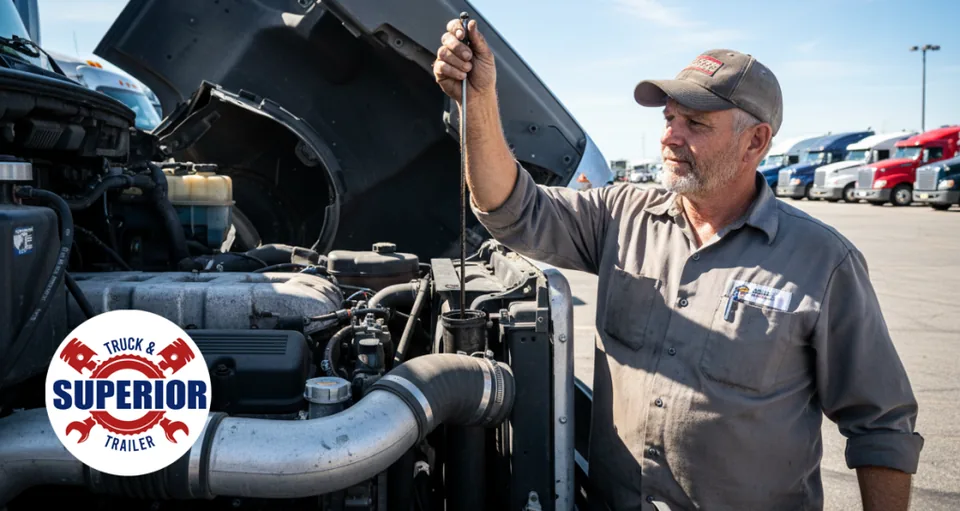
The most obvious visual indicator is milky oil. Pull your dipstick and check the color. Healthy diesel engine oil should be dark and translucent. If it looks tan, foamy, or has a milky appearance, you’ve got coolant contamination. This discolored oil has already lost much of its ability to protect your engine components.
4. Regular Oil Analysis During Routine Maintenance
Regular oil analysis during routine maintenance provides diesel repair diagnostics before problems become visible. Lab testing can detect trace amounts of coolant contamination long before it shows up as milky oil, giving you time to address the issue proactively.
Diagnosing Cylinder Liner Seal Issues Accurately
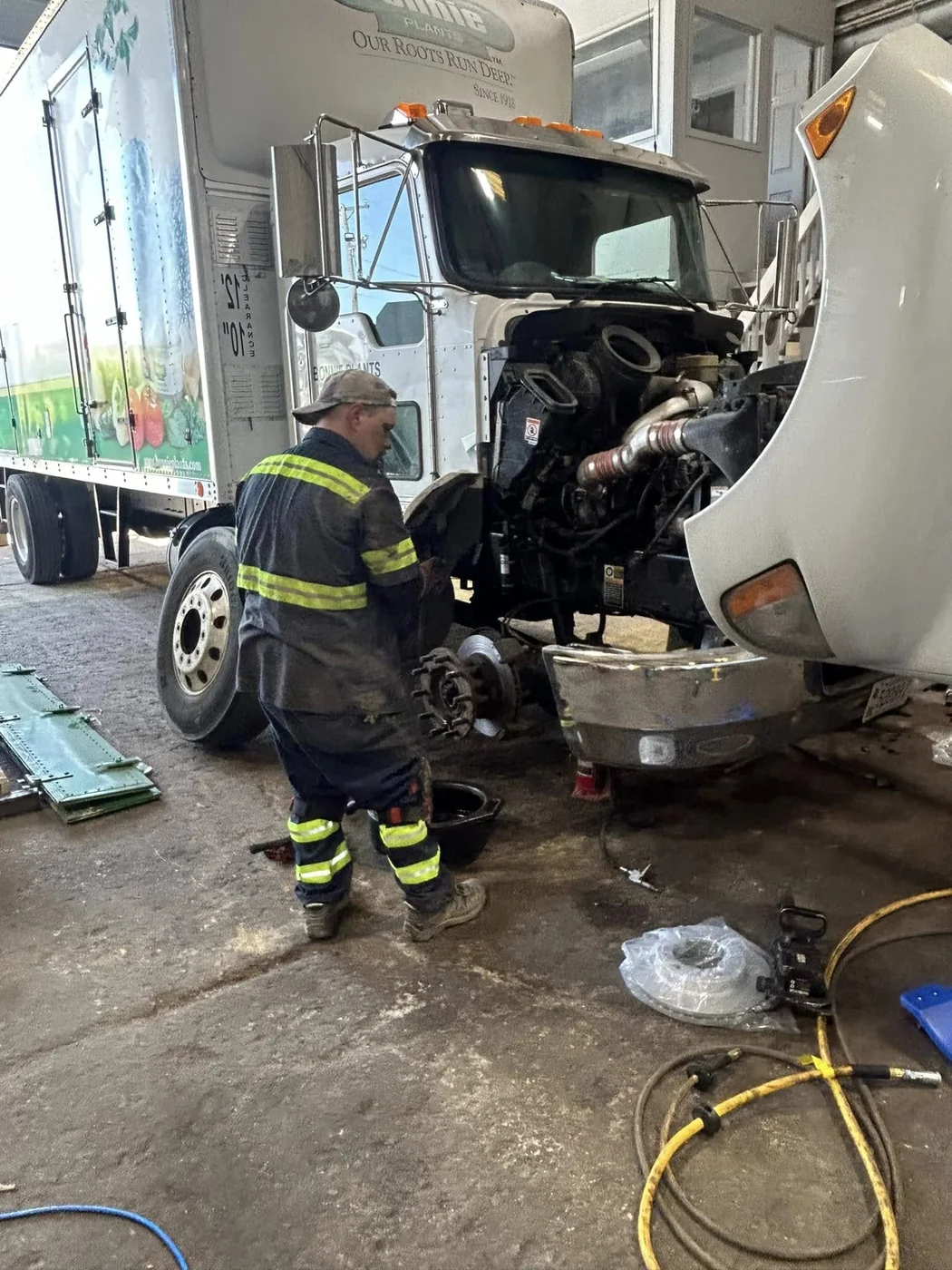
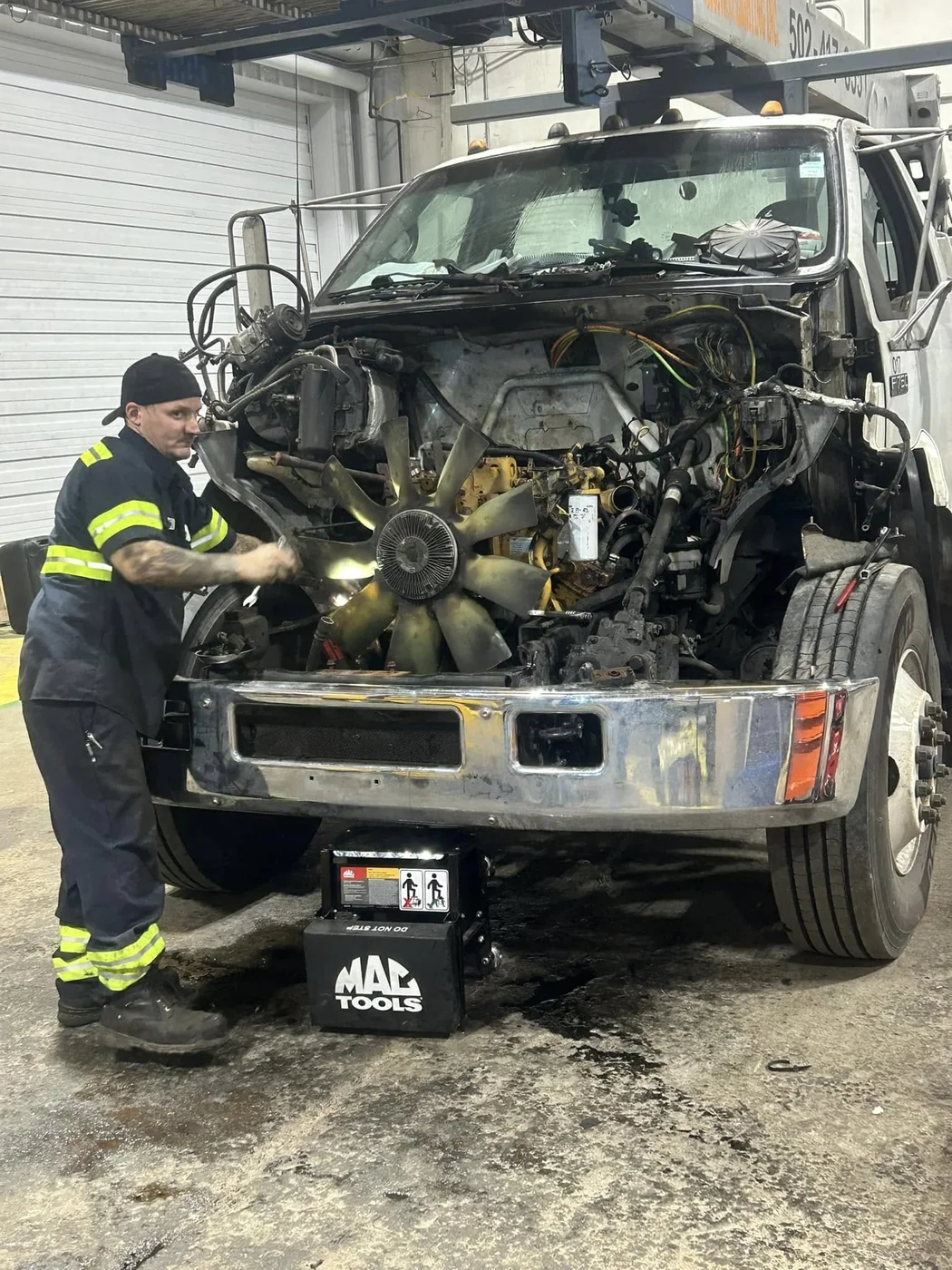
Once you’ve spotted the warning signs, getting an accurate diagnosis becomes critical. The inspection techniques we use at our shop start with removing the oil pan to access the bottom of the cylinder liners. This gives us a clear view of where any potential leaks might be originating.
The next step involves pressurizing the coolant system while the oil pan is off. This diagnostic method reveals exactly where coolant is escaping. When you pressurize the system, you’ll see coolant weeping from specific areas that tell the whole story.
Here’s how we differentiate the source:
Liner seal failure: Coolant appears on the outside of the cylinder liner, between the liner and the block
Head gasket failure or cracked cylinder head: Coolant leaks from the inside of the cylinder
This head gasket failure differentiation is essential because it determines whether you’re dealing with a liner seal replacement or a more complex head-related repair. Misdiagnosing the issue can lead you down an expensive repair path that doesn’t solve the actual problem. The pressurizing coolant system technique eliminates guesswork and shows us exactly what needs fixing.
Consequences of Ignoring Coolant in Oil Problems
When coolant mixes with your engine oil, the damage escalates rapidly. Coolant Getting Into Your Oil Can Mean Serious Semi Truck Engine Damage! The contamination destroys the oil’s ability to create a protective barrier between metal surfaces. Without that crucial oil film, you’re dealing with direct metal-to-metal contact throughout your engine.
The breakdown happens in stages, each more expensive than the last:
Immediate Effects:
- Oil loses its thickness and ability to lubricate
- Protective film between components disappears
- Internal engine temperatures spike in critical areas
Progressive Engine Damage:
- Bearing wear accelerates as contaminated oil fails to cushion rotating components
- Cylinder wall scoring occurs when pistons scrape against unprotected surfaces
- Crankshaft journals develop grooves and damage from inadequate lubrication
- Rod bearings begin to spin or seize completely
The financial impact grows exponentially with each passing mile. What begins as a repair that can be handled easily-changing a few liner seals-quickly becomes a disaster requiring lubrication failure on a scale that needs extensive work. Drivers who overlook warning signals, such as the increase of oil levels or milky oil, are usually those whose repairs cost more than $30,000. If the bearing surfaces are completely destroyed and the cylinder walls are damaged to the extent that simple honing would not suffice, then an in-frame rebuild is necessary.
The worst-case scenario? Total engine replacement. We’ve seen trucks arrive at our shop where ignoring early symptoms resulted in complete engine failure, turning a $3,000 repair into a $30,000+ rebuild or replacement.
Preventative Measures for Avoiding Liner Seal Failures
Protecting your semi truck engine from liner seal failure starts with a solid maintenance schedule focused on coolant system care. The good news? You can avoid most liner seal problems with consistent attention to your cooling system.
Testing Your Coolant Mix
Your coolant mixture should be checked regularly with coolant test strips. These cheap strips will show if your coolant has the correct chemical balance for the prevention of corrosion and cavitation. Test your coolant concentration at every service interval-it’s an easy step that prevents issues from developing by catching them early, saving your liner seals from harm.
The 200,000-Mile Rule
Establish a thorough plan for a total coolant flush and replacement after every 200,000 miles. This procedure is not merely an option-its necessity lies in the fact that it effectively curbs the corrosion and erosion that are the main culprits in the destruction of liner seals. As the days go by, the coolant loses its protective additives, which leads to the vulnerability of your cooling system to the very conditions that result in seal failure. The use of fresh coolant with the right type of additives will not only keep the engine running but also provide the protective chemical barrier that the engine requires.
The Considerations of the Operating Environment
Liner seal lifespan is largely determined by the driver’s habits. Extreme hot and cold weather conditions, constant overheating, and running the vehicle with insufficient coolant are among the driving factors for quick seal deterioration. Adopting best practices for heavy truck repair means treating problems related to the cooling system as urgent-do not disregard the temperature gauge warnings or losses of coolant level. Keeping the cooling system clean, ensuring that the coolant levels are always correct, and taking care of overheating problems immediately as they come up are some of the good practices that can extend the life of liner seals way beyond the usually accepted 600,000 miles.
The Cost Impact and Operational Risks for Truck Operators
Not taking action on the early signs of coolant contamination will soon turn into a huge financial burden for truck companies. What was once an easy repair turns into a $30,000+ engine rebuild if the issue is neglected. The difference between catching a liner seal failure early and waiting too long can mean the gap between a few thousand dollars and a complete engine replacement.
How Downtime Affects Fleet Managers
Downtime costs hit fleet managers differently, but they still feel the impact. For fleet management teams, having one truck in the shop disrupts carefully planned routes and delivery schedules. You’re forced to rearrange loads, possibly paying penalties for late deliveries, and seeing your operational efficiency decline.
The Consequences for Owner Operators
Owner-operator losses are even more significant. Every day your truck is not in use means:
- No money coming in
- Lost opportunities for hauling loads
- Potential violations of contracts
- Increasing repair costs
The real problem? A damaged engine doesn’t just cost you the price of rebuilding it-it also costs you all the income you could have made while that truck was out of commission. Managing risks through regular maintenance isn’t just smart business; it’s what separates profitable companies from those facing financial ruin.
Superior Truck and Trailer Repair’s Approach to Diesel Engine Care
When coolant gets into your oil, it can cause serious damage to your semi truck engine. That’s why you need a diesel repair shop that understands how urgent and complicated these problems can be.
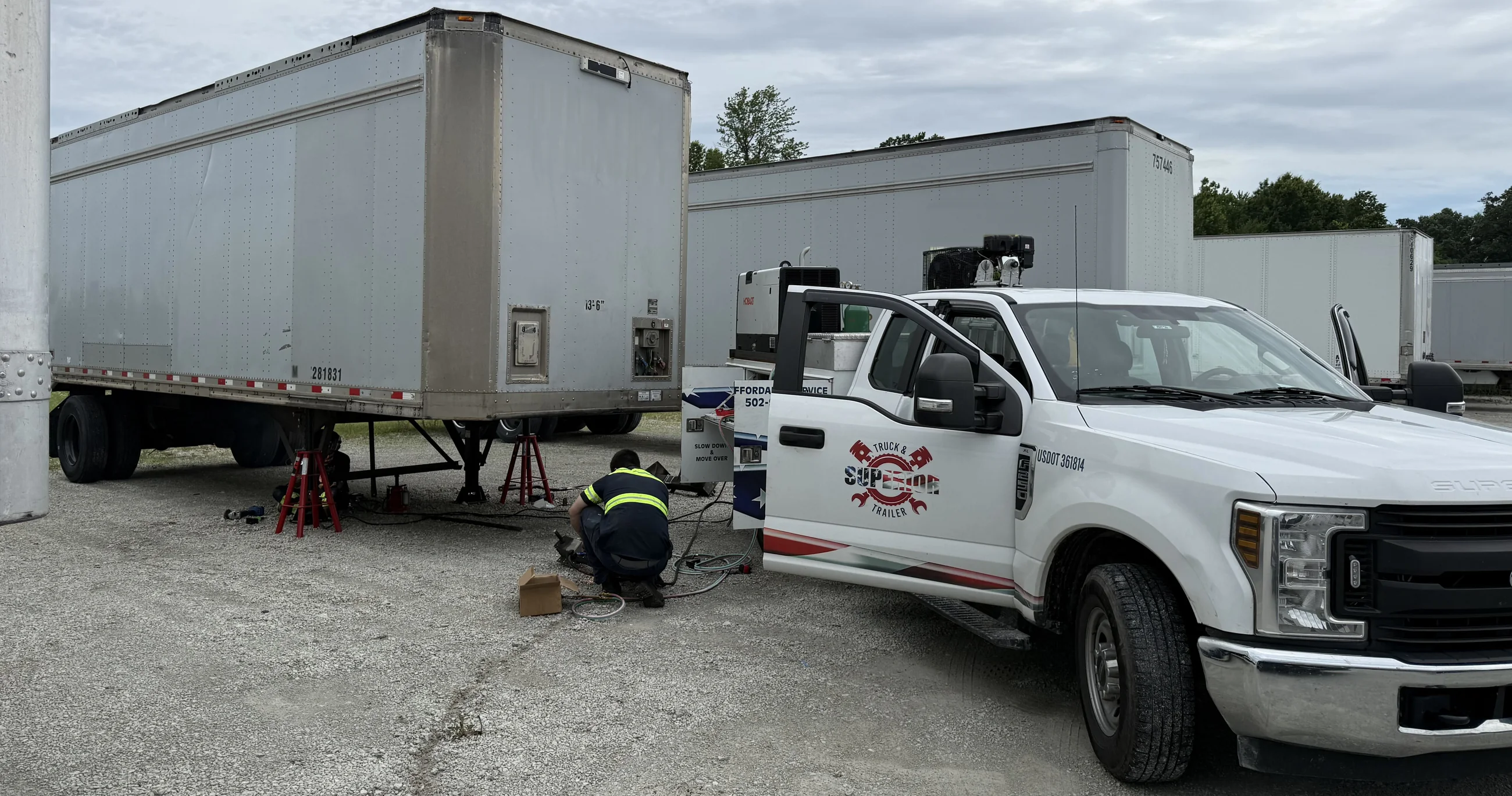
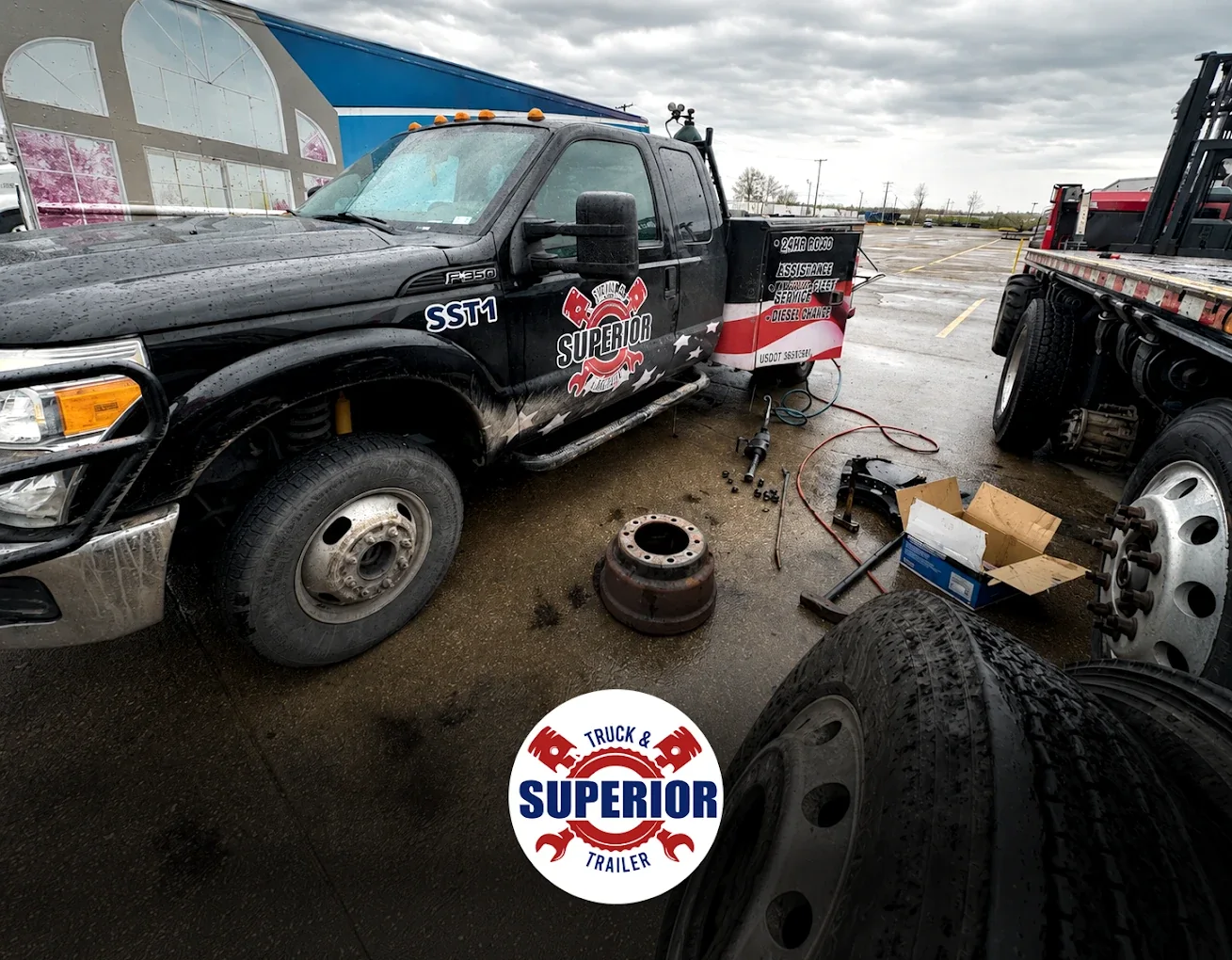
At Superior Truck and Trailer Repair, we specialize in fixing diesel engines. Our main focus is on finding and preventing liner seal failures before they become major issues. Our technicians are trained to spot the signs of trouble-such as coolant loss or a milky appearance in your oil-and we have the tools to confirm any problems with the liner seal before they lead to expensive engine damage.
Why Choose Us?
Expertise: Our team has extensive knowledge and experience in diesel engine repair.
Early Detection: We prioritize identifying problems early on to avoid costly repairs down the line.
Mobile Service: We offer 24/7 mobile service and roadside assistance for added convenience.
Comprehensive Solutions: Our services cover everything from diagnostics to complete inspections.
We understand that breakdowns can happen at any time, which is why our mobile service is available around the clock. Whether you’re stuck on the highway or facing engine issues at a job site, we’ll come directly to you. Our diesel repair services are not limited by distance because we know how important it is for you to get your truck back on the road as quickly as possible.
Our Service Capabilities Include:
- Emergency mobile diagnostics and repairs
- Towing for light and medium-duty trucks
- Heavy-duty towing coordination through trusted industry partnerships
- On-site coolant system pressure testing
- Complete diesel engine inspections
Our goal is to keep your semi truck engines running smoothly through expert diagnostics and preventive maintenance strategies. By combining hands-on experience with advanced diagnostic technology, we aim to identify issues like liner seal deterioration before they require expensive rebuilds costing $30,000 or more.
Choose Superior Truck and Trailer Repair
Coolant getting into your oil can mean serious semi truck engine damage-and we at Superior Truck and Trailer Repair understand just how severe this problem can be. When coolant contaminates your oil system, you’re facing potential costs exceeding $30,000 and operational downtime that can cripple your business.
Our experienced technicians specialize in catching liner seal failures before they escalate into catastrophic engine damage. We provide:
Thorough inspections using proven diagnostic techniques
Timely repairs that get you back on the road fast
Preventive maintenance advice tailored to your fleet’s needs
Your semi truck engine is the heart of your operation, and protecting that investment requires a partner who knows diesel engines inside and out. Whether you need routine maintenance, emergency diagnostics, or immediate roadside assistance, we’re here for you around the clock.
Don’t wait until rising oil levels or milky oil turn into a complete engine replacement. Call us today at (502) 789-6644-your trusted partner in reliable semi truck engine care.