
Semi Truck Braking 101: What You Should Know
Knowing about semi-truck braking systems is not a simple matter of technical knowledge; it’s a matter of life and death on our roads! Knowledge of truck braking systems is very important…


Knowing about semi-truck braking systems is not a simple matter of technical knowledge; it’s a matter of life and death on our roads! Knowledge of truck braking systems is very important for your safety as a driver, other road users’ safety, your professional reputation, and your compliance with the law.
In this regard, we shall cover the major areas of semi-truck braking systems, including types of brakes and their functions, effective braking techniques for any given situation, maintenance requirements and legal considerations, and safety protocols and best practices. Whether you’re a veteran driver or just entering the industry, this guide should go a long way in helping you understand these critical safety systems.
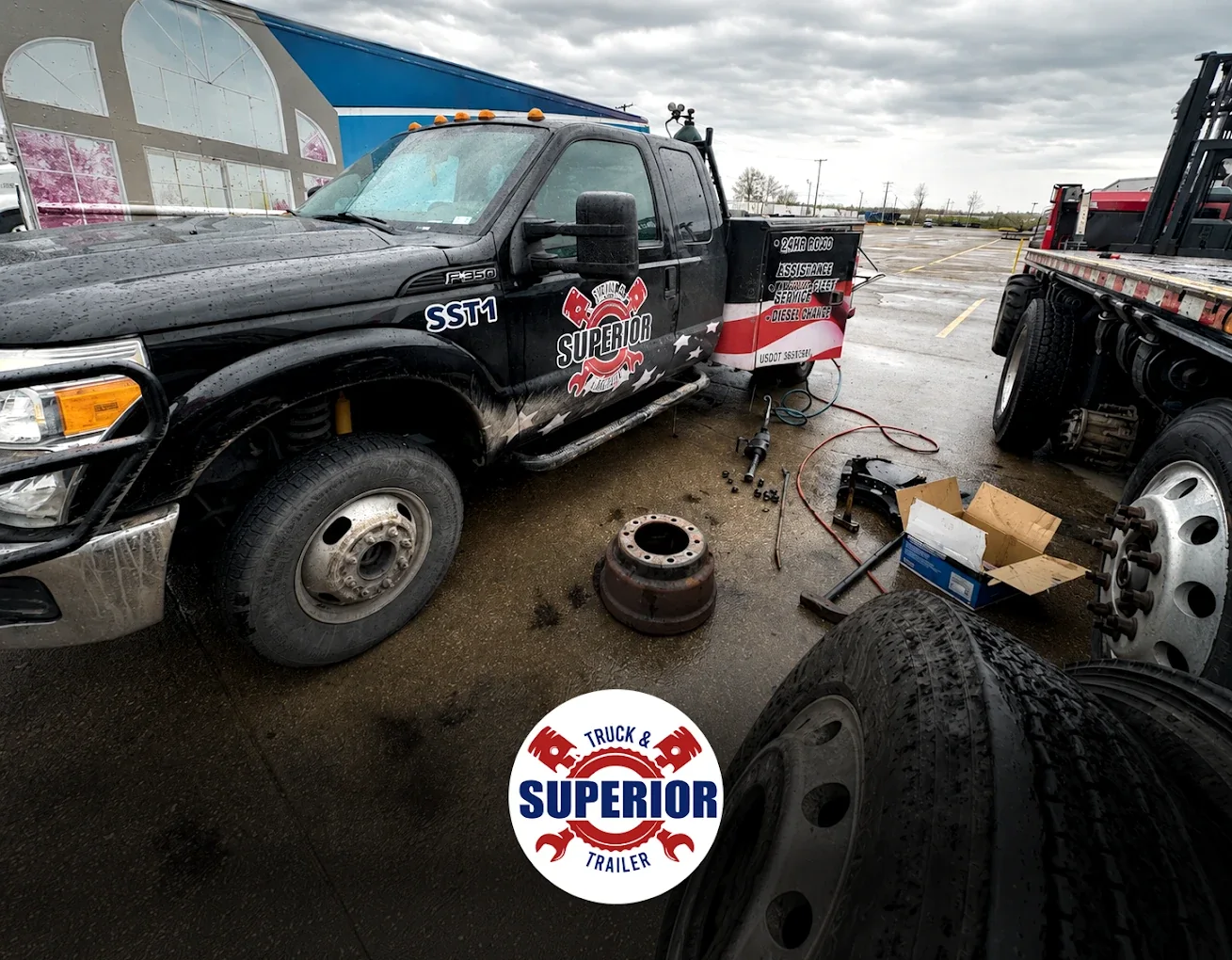
Here at Superior Truck and Trailer Repair, proper knowledge about brakes and maintenance is the founding block of safe trucking operations. Let’s learn more about the inner workings that make these intricate systems work together and how to keep them optimized, always to perform better.
A five-axle semi-truck has individual brakes on each axle: steering axle, drive axle, and trailer axle. This extensive braking system, combined with the engine brake, makes maximum braking power possible and provides stability to the vehicle.
Types of Semi-Truck Brakes
Axle Brakes
This includes the steering axle, both the drive axles, and both the trailer axles.
Engine Brake (Jake Brake)
This is a type of brake within the engine under the hood to help in controlling the truck’s speed while negotiating down mountains.
Air Disc Brakes Compared to Traditional Drum Brakes
Modern trucks have increasingly utilized more air disc brakes for their advantages, including stopping distance reduced by 20-25% compared to drum brakes, less complex maintenance, more reliability, and simpler inspections. Traditional drum brakes require drivers to crawl under the tractor-trailer in an inspection, painstaking if done in inclement weather or a host of changes during the day.
Anti-Lock Braking System
The Anti-lock braking system has been a requirement for truck and trailer tractors since the 1996-1997 model. This system prevents wheel lock when there is heavy braking, aids in keeping directional control, functions electronically and mechanically, and needs professional maintenance for proper working conditions.
Safety Note: While these systems provide added safety, they still can be prone to mechanical or electrical failure. They still require regular maintenance by qualified mechanics to ensure safe operation.
Trailer Brake Considerations
Many of today’s newer trucks are now being built without trailer brake sticks. In response to a growing trend amongst carriers where the separate trailer brake controls can end up causing more issues than they potentially prevent, today’s integrated system offers more control and less potential for jackknifing, brake overheating, loss of control in curves, and uneven brake wear.
This combination of braking components makes up a complex system that requires both skill and knowledge to operate safely. The professional driver must be well informed on the proper use of each component for safe operation on all types of roads and conditions.
Effective Braking Techniques
Mountain Grade Descent
This is the tried and proven method when going down steep grades: Enter the descent at slow speed, set the engine brake (Jake brake) to full power, and let the Jake brake do the bulk of the work. Use the brake pedal intermittently to control engine RPMs, but never use trailer brakes alone during descent. This cools brake pads between applications, preventing brake fade and possible accidents. The constant brake pedal pressure throughout the descent can overheat the brakes – a very dangerous situation that has contributed to serious accidents.
Curve Negotiation
Safe curve handling requires the majority of braking done before entering the curve. Both Jake brake and pedal brakes should be used for initial speed reduction. Minimize brake pressure during the turn and focus on steering through the curve. Do not apply trailer brakes in curves to avoid jackknifing.
Panic Stopping
Different conditions call for different procedures:
For Dry Pavement:
- Apply full brake pressure
- Apply clutch
- Keep steering straight
- Optional – Apply trailer brake
For Slippery Conditions:
- Apply gradual brake pressure
- Use extreme caution
- Keep the vehicle under control
- Consider dash cam for liability protection
Professional Maintenance Needs
Today’s complex braking systems demand professional service. Auto slack adjusters (required since 1994) and ABS systems (required 1996-1997), along with air disc brakes on newer vehicles, require regular inspections by qualified mechanics. These systems interact together to help retain vehicle control during braking. However, like any mechanical device, failures can and do happen.
Professional maintenance is not only recommended; it’s mandated by law. Drivers cannot adjust their brakes; that task has been left to professional mechanics. The proper care of the braking system and proper braking methods is the basis for the safe operation of a semi-truck. Working with carriers that prioritize scheduled maintenance and safety protocols helps ensure your braking system is performing reliably when you need it most.
Safety First in Trucking
Your truck’s braking system needs professional care, it’s the law. Under current regulations, truck drivers are no longer allowed to adjust their own brakes; that’s now a job strictly in the hands of professional mechanics.
Modern braking systems have become so complex that they require specialized knowledge, and incorrect adjustment can lead to catastrophic failures, with huge risks of liability for self-adjusted brakes.
All new commercial vehicles since 1994 have been mandated to have auto slack adjusters, and ABS has been required on new commercial vehicles produced after 1996-97. These advancements make regular professional maintenance even more vital.
Safety First in Trucking
The trucking industry demands extensive skill and technical knowledge, particularly regarding brake systems. Working with reliable carriers is essential to ensure regular equipment maintenance and comprehensive driver training programs.
Your commitment to ongoing education about braking systems directly impacts road safety. Understanding the complexities of air disc brakes, drum brakes, and engine brakes empowers quick decision-making that can prevent accidents.
At Superior Truck and Trailer Repair, we support your safety commitment through:
- Professional brake system inspections
- 24/7 emergency repair services
- Expert maintenance by licensed technicians
- Comprehensive brake system diagnostics
Need expert brake service or maintenance? Call us at (502) 789-6644. Our certified technicians specialize in diesel repair and brake system maintenance to maintain optimal safety levels for your truck.