










Complete Guide For What To Do After You Fail A DOT Inspection
If your semi fails a DOT inspection, you need to know what your next steps are to get it back on the road. In an instant, a failed inspection can bring your operations to a near standstill…


If your semi fails a DOT inspection, you need to know what your next steps are to get it back on the road. In an instant, a failed inspection can bring your operations to a near standstill. Because of this, your company’s revenues can suffer greatly. Immediate consequences may happen with major violations discovered by enforcement officers during a roadside inspection, which may remain on your record for years. Know what happens if your truck fails a DOT inspection-that way, you can plan for the worst and take action in advance.
Over the past several years, the Federal Motor Carrier Safety Administration has completed more than 3.5 million inspections, with failure rates for multiple violation types running above 20%. This type of pass/fail rate is a concern for motorists and very costly for drivers and fleet managers alike.
We’re dedicated to keeping drivers, owner-operators, and fleet managers compliant and on the road. We offer various preventative maintenance solutions to help you avoid costly downtime and ensure that your truck will pass a DOT inspection at select locations. Continue reading to learn about the common violations of truck inspections and how to keep your routes running smoothly.
Immediate Consequences for Failing a DOT Inspection
What if your truck fails a DOT inspection? At this point, the enforcement officer would have to make an instantaneous decision about whether the vehicle could continue to operate or not. Depending on the seriousness of the violations, you can be cited and fined and/or an OOS order can be issued-meaning your truck will be taken out of service. In all of these processes, inspectors will follow strict FMCSA inspection rules.
If your vehicle fails, the inspector will issue citations and fines for any documented violations, along with providing you with paperwork that outlines specific problems with your truck. You could also be subjected to an immediate out-of-service notice; the possible consequences of which include expensive towing fees. Unless you receive an OOS notice, you will be granted a time period in which you must address inspection violations to maintain compliance.
Can You Continue Driving After a Failure?
Whether or not you can continue driving depends on the nature of the violations noted. The FMCSA has very specific out-of-service criteria indicating when a commercial vehicle is an imminent hazard.
Non-Critical Violations That Allow Continued Operation:
- Minor lighting issues that do not affect visibility.
- Documentation problems or missing paperwork.
- Equipment defects that do not compromise immediate safety.
- Violations with fix-it timeframes.
- Problems that can be resolved at the destination.
Critical Violations Resulting in Immediate Shutdown
- Defects or failures in the brake system.
- Tire issues, including tread depth or damage.
- Malfunctions in the steering system.
- Failures in load securement.
- Hours-of-service violations.
When and Why an Out-of-Service Order Is Issued
Enforcement officers place out-of-service orders for conditions that the FMCSA has identified as meeting specific criteria indicative of immediate safety risks. It is an objective decision, not left to the judgment of each individual enforcement officer; it may be applied to drivers, vehicles, or carriers depending upon the nature of the violation in accordance with federal rules.
Vehicle Orders:
- Brake issues and system malfunctions.
- Steering problems that compromise control.
- Tire challenges, such as improper tread depth or damage.
- Structural concerns that undermine vehicle integrity.
- Drivers are prohibited from moving the vehicle until these issues are resolved.
Driver Orders:
- Violations of hours-of-service regulations.
- Issues with medical certification.
- Problems with commercial driver’s licenses.
- Failures in drug and alcohol testing.
- These factors render drivers unable to operate any commercial vehicle.
Carrier Orders:
- Patterns of violations across fleet operations.
- Operating without the necessary authority.
- Systematic failures in safety compliance.
- These issues impact all vehicles and drivers within the company.
Common Violations That Lead to Out-of-Service Orders
It will be easier to focus your maintenance work on the areas that typically result in out-of-service orders if you have a list of the most common inspection failures. The violations during the truck inspections fall under the following main categories:
Brake Problems: This includes air leaks and insufficient braking power along with missing or broken parts.
Tire Defects: Some of them are deficient tread depth, tire damage, and incorrect size.
Electrical/Lighting Issues: Here you will find burnt-out lights, non-functioning turn signals, and missing components. Hours of Service Issues: These consist of electronic log inaccuracies, incomplete logs, and duty status or rest period violations.
Driver vs. Vehicle Violations
Understanding the difference between driver and vehicle violations, and what to do when the DOT inspection fails, enables the taking of immediate action with regard to failures resulting from an inspection. These classifications determine who is responsible for corrections and what must be done in order to get back on the road.
Driver Violations:
- Issues with hours-of-service and log compliance.
- Problems with medical certification or outdated physical examinations.
- Complications regarding commercial driver’s licenses.
- Failures in drug and alcohol testing.
These violations are attributed to the driver, regardless of the vehicle used, often necessitating waiting periods or specific corrective measures.
Vehicle Violations:
- Mechanical failures and defects.
- Brake and tire issues.
- Problems with lighting and electrical systems.
- Structural damages that compromise safety.
These violations may halt the operation of specific trucks until necessary repairs are made but do not impact the driver’s ability to work. Repairs typically require certification from a qualified mechanic.
Combination Violations:
- Issues with load securement affect both drivers and vehicles.
- Violations related to hazardous materials.
- Problems with weight and dimensions.
These types of violations can lead to both driver and vehicle out-of-service orders.
Understanding Out-of-Service Orders
What occurs if your truck fails a DOT inspection and receives an out-of-service (OOS) order? An OOS order legally prohibits any further operation until the violations are rectified. Continuing to use a vehicle or driving under an active OOS order can lead to significant penalties.
Legal repercussions for breaching an OOS order:
- Fines reaching up to $25,000 for continued operation.
- Potential criminal charges for intentional violations.
- Additional CSA points and negative impacts on safety scores.
- Risk of license suspension or revocation.
- Increased penalties for repeated violations.
Documentation to Lift Orders:
- Vehicle repairs must be certified by a qualified mechanic.
- Driver-related violations call for medical updates or log corrections.
- Evidence proving all cited issues have been addressed.
- Verification through re-inspection for complicated repairs.
- Correct paperwork should accompany the vehicle during future inspections.
The enforcement agencies share the out-of-service information amongst all regions; it does not matter in which state you shift to. The violation affects your record and determines future inspections, irrespective of where the inspection took place.
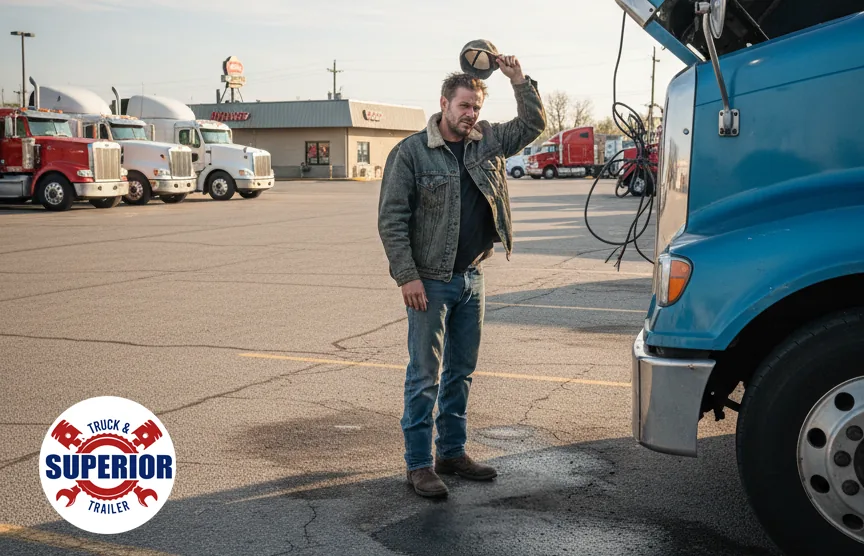
Consequences of Failed Inspections to Carriers and Drivers
These failed inspections have immediate costs and long-term repercussions, extending beyond the exact moment when a vehicle is stopped. Knowing such implications is very important for both drivers and fleet managers alike.
Consequences of CSA Scores
The CSA program assigns severity points for each violation uncovered during inspections, which can make a big difference in your safety profile and in the overall operations of your business.
Here’s how CSA scoring influences your operations:
- Points accumulate over a period of 24 months, impacting safety scores.
- Higher scores result in more frequent inspections.
- Recent violations are weighed more heavily than older ones.
- Out-of-service violations carry the highest point values.
- Scores remain visible for a full 24-month timeframe.
Consequences of CSA Scores:
- Increased frequency of roadside inspections.
- Greater scrutiny from enforcement personnel.
- Potential interventions from FMCSA for low scores.
- Challenges in securing high-quality freight and contracts.
- Stiffer penalties for repeat violations.
Insurance and Reputation Concerns
The consequences of failure here go well beyond the immediate fine and operational downtime; there are long-term repercussions to relations with insurance companies and clients, as safety data increasingly informs business decisions.
Insurance Implications:
Insurance implications related to safety and compliance are becoming increasingly significant. For those reasons, premium hikes often correlate with CSA scores, which influences the cost of a carrier’s insurance. In addition, their policies could be cancelled due to poor safety records, further giving significance to safety performance. Those with violations also have to deal with increasing deductibles, adding more to their financial woes. As safety becomes more of a prevalent concern, carriers also need to understand these ramifications and work towards improving their safety on the road.
Impact on Business Reputation
Business reputation is among the key aspects that concern an organization the most. The standing of a business plays a major role in setting the customers’ instinct about the company, making the workers happy, and taking over the market. A favorable reputation may allow a company to have a bigger number of loyal customers, be a great competitor for the best workers, and create strong partnerships, while the opposite can damage the company by losing customers and cutting off value of the brand. The main reputation factors for any company would be the quality of customer service, the excellence of the product, and the social responsibility.
For this reason, long-term success necessitates the building and maintaining of positive images that take many, many years of steady communication with the general public, ethical practices, and community involvement. It follows, then, that a business will have to take care of its reputation to meet the challenges and avail itself of the opportunities offered by the competing world.
Returning to Service After a Violation
When a motor carrier receives an out-of-service order, it must go through certain procedures and provide extensive documentation, without which the carrier is not allowed to operate again. If you are aware of these requirements, you can minimize downtime, and might as well avoid paying fines.
For Vehicle Violations:
- Obtain qualified repairs from certified mechanics.
- Attain written proof that all defects have been corrected.
- Ensure all repairs comply with relevant safety standards.
- Retain all repair documentation within the vehicle.
- Some violations may necessitate a re-inspection before the vehicle can return to service.
For Driver Violations:
- Fulfill mandatory rest periods for hours-of-service violations.
- Update medical certifications or undergo required physical examinations.
- Correct any issues with electronic logging devices.
- Provide necessary documentation to enforcement officials.
- Wait for clearance before resuming operations.
The records are to be maintained for perusal during subsequent inspections. In case the repairs or compliance is doubted, the officers may ask for further information.
Preventing Future Failed DOT Inspections
The best defenses against DOT inspection failures are proactive maintenance and thorough preparation. Focus on the most common issues that result in violations.
Key Maintenance Focus Areas
Schedules for maintenance should be developed in detail for brake systems in particular, to ensure that vehicles operate with performance and safety. The conditions of tires should be constantly monitored to replace them well before reaching legal limits. Moreover, all the lighting systems should be checked time after time to ensure that they work perfectly. Similarly, accuracy in recording and documentation in hours-of-service logs is required to track compliance and safety. Mechanical issues should be dealt with promptly and not allowed to deteriorate into a safety issue.
Advantages of Professional Maintenance
Professional maintenance has a lot of advantages in key areas, which enhance the working performance and dependability of the vehicle. Regular oil change increases the dependability of the engine, while timely replacement of air filters enhances the possibility of preventing possible engine breakdowns. Professional repair of tires can sort out most issues well before they turn into major violations. Comprehensive preventive maintenance also allows early identification and saves time and resources in the long run.
Additionally, we at Superior Truck and Trailer Repair are staffed with certified inspectors who help in maintaining compliance, enabling vehicles to stay in premium state and meet all necessary standards. Besides, it’s always cheaper to invest in preventive measures than to bear the costs for the aftermath of violations. Failures in inspection come with immediate costs and long-term damage to safety scores and business reputation, which far outweigh the benefits of regular maintenance and professional inspections. Give us a call today at (502) 789-6644 to book your professional mobile semi repair services today!



