










How A Semi Truck Suspension Keeps Your Semi Truck Going
Your semi truck suspension system is so much more than just a set of springs, it’s the backbone of your vehicle’s performance and reliability on the road. Professional diesel repair…

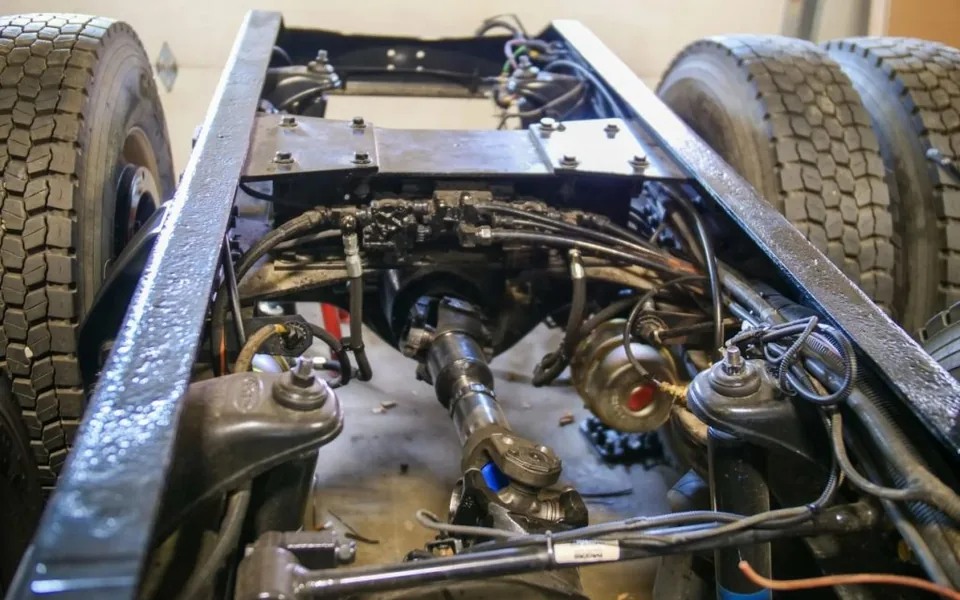
Your semi truck suspension system is so much more than just a set of springs, it’s the backbone of your vehicle’s performance and reliability on the road. Professional diesel repair experts, like us here at Superior Truck and Trailer Repair, understand that a well-maintained suspension system directly impacts the success of your trucking operation.
Consider your truck’s suspension as a rather complex orchestra, where each component plays a vital role in supporting vehicle weight under varying conditions of a load, road shock absorption to save your cargo and equipment, keeping tires in contact with road surface, and keeping handling stable during maneuvering and turns.
For fleet managers and owner-operators, knowing your suspension system means real business advantages through fewer maintenance dollars spent, longer life from your tires, improved fuel economy, increased safety for equipment and cargo, and better comfort for your drivers.
The right suspension setup can mean the difference between a smooth, profitable operation and constant maintenance headaches. Whether you’re hauling across state lines or making local deliveries, your suspension system affects performance of every aspect of your truck, from the ride quality to the load-carrying capability.
Understanding Semi Truck Suspension Systems
Your semi-truck suspension system is far more than simply a set of springs, it’s an intricate web of parts working together to keep your rig stable and safe on the road. These systems are the unsung heroes in performance, silently doing the heavy lifting necessary to keep control and comfort.
The Three Critical Functions of a Suspension System
A well-designed suspension system serves three basic functions: support of weight, by effectively distributing the heavy weight of your truck and cargo across all axles; shock absorption from road irregularities to protect both cargo and truck components; and road contact management, maintaining constant tire-to-road contact for optimum traction and handling.
How Suspension Design Affects Truck Handling
Your suspension design directly affects your semi truck’s performance on varying road conditions. When your truck hits a bump, the components of the suspension compress and extend to keep your tires planted firmly on the road surface. This constant adjustment prevents cargo damage from extreme bouncing, premature wear of truck components, loss of control in sudden maneuvers, and uneven tire wear.
Exploring Different Suspension Configurations
Different suspension configurations offer varying levels of performance in these areas. From traditional leaf springs to advanced air systems, each type brings its own mix of benefits to match specific hauling needs and road conditions.
Leaf Spring Suspension
Leaf spring suspension is the most traditional for heavy trucks. It consists of many thin layers of metal leaves piled on top of each other, flexing and absorbing shock as weight is applied to the truck. Its key benefits include exceptional durability with no deformation due to heavy loads, simple design with fewer components, lower costs related to installation and maintenance, and more reliability in rough terrains.
However, it does have limitations. It gives a bumpy ride, especially on uneven road surfaces, transfers road shock directly to the cab and cargo, has limited flexibility for adjusting to different load weights, and can affect handling and stability under varying conditions. Leaf springs work best for freight carriers that regularly haul heavy loads. Many trucks use this system on all axles to maximize strength and reliability during demanding operations.
Air Suspension
Air suspension systems are the newest in semi-truck comfort and performance. A rubber or polyurethane air bag is held by the system, which inflates or deflates as per your requirement of the load. The air and the cushioning and supporting of the dedicated compressor are maintained at all times, making it very responsive during your journey.
Air suspension offers superior ride quality as the airbags absorb road shocks and vibrations, thereby protecting the driver and cargo. Load adjustability is another advantage, as air pressure can be fine-tuned to accommodate varying cargo weights for ideal load distribution. The improved shock absorption means extended vehicle life with less wear on truck components.
However, there are important considerations. The system has a higher installation cost than traditional leaf springs due to its complexity. It requires maintenance checks to prevent air leaks, and more components, compressors and airlines, require periodic inspection. Many modern trucks still keep the use of air suspension for the rear axles but keep the leaf springs in the front, which gives the perfect balance between stability and comfort in long haul operations.
Torsion Bar Suspension
Torsion bar suspension is another method of controlling your truck’s ride quality. It fastens a metal bar at one end, therefore allowing it to twist and flex once your vehicle meets road irregularities. This twisting motion creates the spring action that absorbs shock and maintains stability.
The system features a compact design that saves precious under-truck space, provides better ground clearance than traditional leaf springs, and delivers smooth ride quality for lighter loads.
However, it is less suitable for heavy-duty trucking due to load capacity restrictions and requires frequent adjustments to maintain proper torsion and alignment. Its use in commercial semi-trucks is limited due to weight constraints. Where torsion bars are good at lighter applications, their sweet spot in performance lies in medium-duty operations where space optimization and ride comfort are valued over maximum load-carrying capacity.
Hydraulic Suspension
Hydraulic suspension systems use fluid-filled cylinders to actively control load distribution and cushioning, bringing advanced technology to semi-trucks. The systems respond to road conditions through the movement of hydraulic fluid in the cylinder, creating an active response to bumps and changes in the surface.
The system provides excellent shock absorption characteristics, accurate adjustments in ride height, adjustable management of loads of different weights, and better ride quality on uneven surfaces. However, it comes with challenges: complex system components require specialized maintenance, there’s an increased risk of fluid leaks which can affect performance, higher initial installation costs, and the need for routine system checks to ensure optimal function.
Hydraulic suspension is unparalleled in its ability to provide both control and comfort for drivers carrying sensitive cargo or driving on varying road conditions. The system is especially useful in routes where cargo weights change, thanks to its adaptability to such loads.
Walking Beam Suspension
The walking beam suspension is a special design for hostile terrains. In a very unusual setup, this design makes use of pivoting beams that distribute weight across multiple axles, when one axle hits a bump, the other flexes down to keep things stable. It offers excellent performance on rough terrain, superior traction control in off-road conditions, even weight distribution across axles, and extended tire life through balanced load sharing.
However, this system comes with certain limitations. It’s less efficient for regular highway operations, has a complex design requiring specialized maintenance, experiences increased wear and tear under normal driving conditions, and needs increased maintenance due to more moving parts. Such suspension is, in particular, meant for special trucks in which traveling over rough land or even in construction areas or sites is pretty regular. Its keeping in contact with the ground during operations is one feature that will make this suspension system truly significant in instances requiring stability in trying conditions.
Operational Efficiency: The Choice of the Suspension System, Need Assessment
Your suspension system choice goes directly to your trucking operation’s success. For load capacity requirements, heavy freight carriers benefit from leaf spring systems’ durability, while variable load operations work best with adjustable air suspension. Mixed configurations offer versatility for diverse cargo types.
Regarding route and road conditions, long-haul highway routes are best suited for air suspension for driver comfort. Regional deliveries work well with mixed configurations for adaptability, while off-road applications benefit from walking beam or heavy-duty leaf springs.
When considering costs, leaf springs have a lower up-front investment, though air and hydraulic systems need to be inspected regularly. More expensive systems reduce wear and tear on other components, providing long-term value. For operational priorities, driver comfort and retention benefit from air or hydraulic systems, maximum payload capacity is best achieved with conventional leaf springs, and varied applications work well with combination suspension systems.
Your choice of suspension affects fuel efficiency, maintenance intervals, driver comfort, and the safety of your payload. A regional delivery operation might need the flexibility to change up combo configurations, while a dedicated heavy-haul operation might need the stout dependability of leaf springs. Consider your particular operating needs and any future expansion when choosing your suspension system.
Choose Superior Truck and Trailer Repair
Your semi truck’s suspension system is crucial to its performance and life. Each type has its pluses, be it the strength of leaf springs or the smoothness of air suspension systems. When selecting a suspension setup, we recommend that you consider your specific hauling requirements, road conditions, and budget.
At our diesel repair services, we know how complex semi-truck suspension systems can get. We want to help you keep your semi performing at its best through regular inspections and maintenance. Remember: proper suspension system maintenance not only gives you a smoother ride but also protects your load and extends the life of your rig.
Need better performance from your semi truck? Call today at (502) 789-6644 for the best in suspension systems repair and maintenance!



