










The Case for Mandating Trailer UnderRide Guards on Commercial Trailers
Truck safety developments in the trucking industry are usually controversial subjects, and this week, an integral safety item is being controversial: trailer underride guards. Safety…

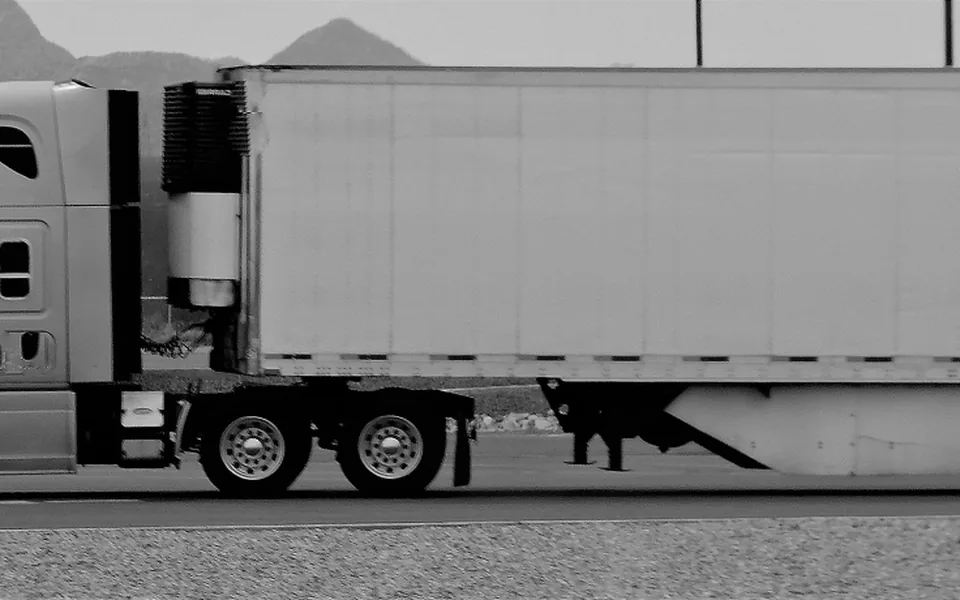
Truck safety developments in the trucking industry are usually controversial subjects, and this week, an integral safety item is being controversial: trailer underride guards. Safety guardrails that safeguard cars from becoming wedged beneath trailers during collisions are now high on the priority list for commercial transportation safety.
The National Highway Traffic Safety Administration offers sobering statistics: requiring underride guards would save 89 lives and stop 409 injuries every year. For a supposed $3,000 per trailer expense, such a safety factor makes one wonder how to compromise fiscal outlays with human lives.
The trucking community stands divided on this issue:
- Safety advocates push for immediate implementation, arguing that saving lives justifies any cost
- Industry stakeholders express concerns about implementation costs, especially for smaller carriers
- Government regulators weigh both perspectives while considering nationwide mandates
This ongoing controversy presents a vital question: Should safety devices that have the potential to prevent fatal crashes be mandated, even at an economically expensive cost to some carriers?
Understanding Trailer UnderRide Guards
Trailer underride guard systems are safety components mounted below semi-trailers. They are designed to keep smaller vehicles from sliding under in the event of a crash. These protection systems provide an invaluable shield between the road and the underside of the trailer as a physical barrier deflecting impact forces.
Types of Trailers Requiring Guards:
- Dry box trailers
- Refrigerated (reefer) trailers
Note: The mandate excludes specialized equipment such as:
- Cattle trailers
- Lowboy trailers
- Car carriers
- Enclosed car haulers
The underride guard system consists of aluminum or steel barriers strategically positioned along the trailer’s sides. During a high-speed collision, these guards prevent catastrophic outcomes by stopping the smaller vehicle before it can penetrate beneath the trailer body.
How UnderRide Guards Work:
- Create a physical barrier at car-level height
- Absorb and distribute collision impact
- Force vehicles to engage with the guard rather than sliding under
- Maintain the structural integrity of the passenger compartment
- Preserve survival space for vehicle occupants
Without these protective systems, a speeding collision can cause the passenger vehicle to travel far beneath the trailer, leading to severe consequences, including the shearing of the vehicle’s roof supports.
The Case for Making UnderRide Guards Mandatory
Safety advocacy groups have a clear stance: saving lives should be more important than financial concerns. The National Highway Traffic Safety Administration’s data backs up this viewpoint with powerful statistics:
- 89 lives could be saved every year
- 409 serious injuries could be avoided each year
These statistics show the avoidable tragedies on our highways. Safety activists consider the $3,000 price tag per trailer a minimal cost to pay for preserving human life.
The moral argument relies on a simple question: How do we put a value on human life and compare it with implementation costs? Although cost-benefit analysis is applied in the trucking sector to weigh safety measures, advocacy groups protest against this approach.
This viewpoint shifts the discussion from purely economic factors to moral responsibility. The possibility of preventing devastating accidents – such as the heartbreaking incident where an entire van of passengers lost their lives due to an underride collision – shows the real-world significance of these safety measures.
Safety groups point out that the $3,000 investment per trailer is only a small portion of the human and economic costs linked to fatal underride accidents. They contend that the trucking industry’s opposition to this requirement puts profit margins ahead of public safety.
Opposition from the Trucking Industry
The trucking industry’s resistance to mandatory underride guards stems from significant financial implications. The estimated cost of $3,000 per trailer represents a substantial investment, particularly for smaller operations.
Cost Analysis Breakdown:
- Initial installation: $3,000 per trailer unit
- Additional maintenance requirements
- Potential structural modifications
- Weight considerations affecting cargo capacity
The distinction between mega carriers and small operations generates a vast disparity in implementing capability. Mega fleet operators are able to absorb these costs through their operation, whereas independent owner-operators and small carriers struggle financially.
The industry’s cost-effectiveness strategy is problematic with respect to the value of the safety measures as assessed. Business firms compare their investment against the projected safety dividends the National Highway Traffic Safety Administration calculated – 89 lives saved, 409 serious injuries avoided annually.
Industry Concerns:
- Impact on small business sustainability
- Competitive disadvantages for smaller carriers
- Additional weight affecting fuel efficiency
- Maintenance accessibility issues for drivers
- Structural integrity considerations for trailer floors
The trucking industry argues that mandating these requirements disproportionately injures smaller operators, potentially pricing some out of business. Mega carriers can afford the $3,000 per unit cost, but independent operators view the cost as a costly economic burden during an already tight freight recession.
Case Studies and Real-Life Impacts
A haunting real-life incident shared by a truck driver illustrates the devastating consequences of underride accidents. On a snowy night along the 401, two truckers encountered a semi-trailer positioned sideways across the road. A van carrying seven to eight passengers, unable to spot the trailer in time, drove straight underneath it. The result was catastrophic – all occupants were decapitated in the collision. An underride guard system could have prevented these deaths, allowing the van to bounce off rather than slide beneath the trailer.
Key Statistics on Accident Responsibility:
- 70-90% of truck-related accidents are initiated by passenger vehicles
- These numbers include underride incidents
- The presence of underride guards could transform fatal collisions into survivable accidents
The data presents a complex reality: while passenger vehicles are predominantly responsible for these accidents, the trucking industry holds the key to preventing their fatal consequences. The National Highway Traffic Safety Administration’s research supports this, projecting that underride guards could save eighty-nine lives annually, with four hundred and nine serious injuries prevented each year.
These numbers represent real people – parents, children, friends – whose lives hang in the balance of this safety decision. Each prevented fatality transforms a potential tragedy into a survivable incident, where occupants might walk away with injuries rather than lose their lives.
Alternative Solutions and Recommendations
A balanced approach to trailer underride safety requires innovative thinking and shared responsibility. The current proposal of placing the entire financial burden on trucking companies – especially small carriers – needs reconsideration.
Government-Funded Safety Initiatives
- Direct reimbursement programs for carriers choosing to install underride systems
- Tax incentives for early adoption of safety equipment
- Subsidized installation programs targeting independent owner-operators
- Cost-sharing arrangements between federal and state transportation departments
The estimated $3,000 per trailer cost hits small carriers and independent operators particularly hard. A government-funded program would ensure safety improvements without crippling smaller businesses.
Innovative Safety Solutions
The trucking industry faces pressure to develop increasingly complex safety features:
- Foam rubber truck designs
- Full-vehicle airbag systems
- Advanced collision prevention technology
Yet these Band-Aid solutions miss a crucial point: addressing driver behavior. Real progress requires enhanced four-wheeler driver education programs. Compliance retesting of truck drivers is necessary, along with improved enforcement of already existing traffic laws. Public information campaigns focused on truck safety sectors are also critical in avoiding accidents and improving overall road safety.
The emphasis should be shifted from reactive equipment to proactive safety standards. While underride guards serve a vital purpose, comprehensive safety improvements demand collaboration between government agencies, trucking companies, and the driving public.
Choose Superior Truck and Trailer Repair
The trailer underride guard debate is a choice between money and human lives. While the trucking industry laments the cost of installation, the value of saving 89 lives and avoiding 409 serious injuries per year is invaluable. The $3,000 price tag per trailer is a small price to pay to avoid fatal crashes and keep families safe on our highways.
Safety is our top priority in every trucking activity here at Superior Truck and Trailer Repair. Be it trailer safety options or expert diesel repair for your fleet, we are dedicated to assisting you in ensuring everyone and your entire fleet remains safe on the roads.
Ready to enhance your trailer’s safety? Contact us at (502) 789-6644 for expert advice and assistance.
Your safety is our priority – let’s work together to make our roads safer for everyone.



