Spare Tire Lifespan: When to Replace Your 18 Wheeler’s Backup & Maintenance Tips
Your 18 wheeler spare tire is not just some extra gear, it’s your backup in case of a roadside breakdown! You, being a truck owner or operator, understand the vital importance of spare…

Your 18 wheeler spare tire is not just some extra gear, it’s your backup in case of a roadside breakdown! You, being a truck owner or operator, understand the vital importance of spare tires in ensuring that your heavy-duty truck remains in top condition for whatever lies ahead.
Consider this: You’re hundreds of miles from the last service station when one of your tires ruptures. Your spare tire is all that’s between you and minutes versus expensive downtime. That’s why regular spare tire maintenance is crucial to your truck’s reliability and your company’s profitability.
Continue reading for tips on how to:
- Identify the right time to replace your spare tire
- Learn key maintenance practices to extend tire life
- Understand the unique requirements for 18-wheeler spares
- Discover professional support options for tire emergencies
Your spare tire’s condition directly impacts your truck’s reliability and safety. Just like regular diesel maintenance keeps your engine running smoothly, proper spare tire care prevents unexpected setbacks on the road. Let’s dive into everything you need to know about managing your 18-wheeler’s backup tire system.
Understanding Spare Tire Lifespan for 18 Wheelers
Your spare tire contributes to your truck’s safety and reliability. Just like regular diesel upkeep keeps your engine purring, regular spare tire upkeep avoids roadside surprises. Let’s get into everything you need to know about the backup tire system in your 18-wheeler.
Your spare tire’s age is more important than you realize. Despite perfect tread depth, spare tires have a strict shelf life of 6 to 7 years. It is not an arbitrary number, it is derived from the natural degradation process in all rubber compounds.
Direct sunlight accelerates material deterioration
Moisture penetration weakens internal structures
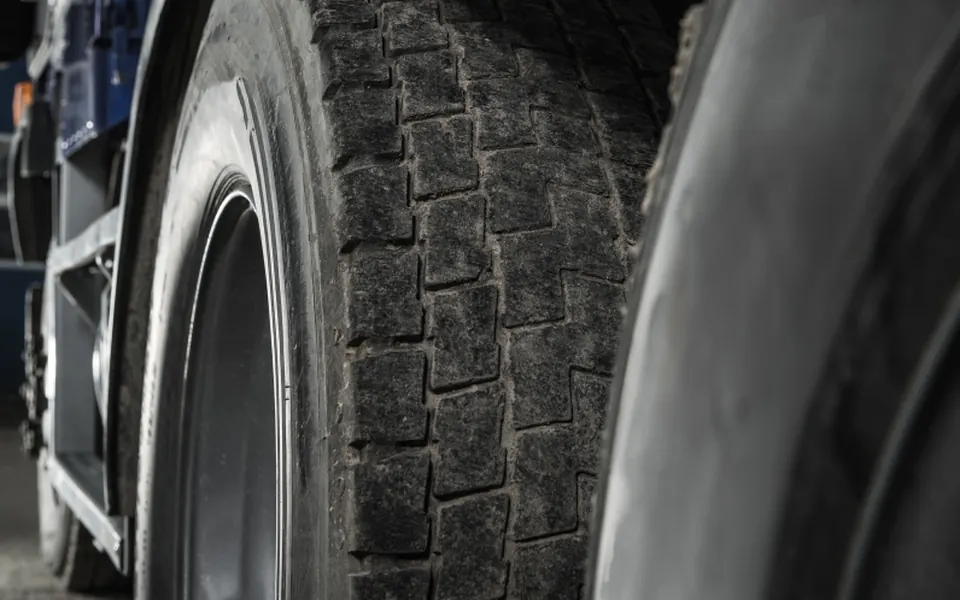
A critical issue affecting spare tires is dry rot – a condition where the rubber becomes brittle and develops cracks. This can happen even if your spare has never touched the road. The signs of dry rot include:
- Small cracks on the tire surface
- Discolored or faded rubber
- Brittle texture when pressed
Your spare tire’s structural integrity diminishes silently in storage. A visual inspection might show plenty of tread depth, but the rubber compound itself loses strength and flexibility as time passes. This degradation affects the tire’s ability to:
- Handle road stress
- Maintain proper inflation
- Provide reliable traction
- Support heavy loads safely
In heavy-duty trucks, this aging process is more crucial because of the tremendous weight and loads that these vehicles have to carry. A worn-out spare tire may completely fail when you actually need it in times of emergency replacement.
Why Regular Replacement is Important for Heavy-Duty Trucks
Your 18-wheeler’s spare is a lifeline during surprise roadside breakdowns. Semi-trailers, unlike autos with their tiny “donut” spares, need full-size spare tires that match the full-size wheels. Heavy-duty spare tires are made to enable you to operate under standard conditions at typical highway speeds, transport heavy loads without losing strength, and travel rough roads under recovery conditions.
Keeping the proper distribution of weight in its position is also important as it maintains the stability and responsiveness of the truck even with tire replacement. With an adequate spare tire, truck drivers can reduce downtime, safeguard precious cargo, and ensure sufficient safety levels on the highway, particularly in the event of unforeseen blowouts far from help.
A worn-out spare tire will strand you at the worst possible moment. Picture it: You’re carrying sensitive freight down a remote road when you blow out. An old, unreliable spare could mean:
- Extended downtime
- Missed delivery deadlines
- Costly emergency repairs
- Potential safety hazards
The stakes are higher for commercial trucks – your spare isn’t just a temporary fix; it’s a critical backup system that needs to perform as well as your primary tires! Regular replacement of your spare tire is a vital part of your preventive maintenance routine, just like diesel engine servicing and other semi truck repairs.
Maintenance Tips to Extend Spare Tire Life
Your spare tire’s longevity depends on proper maintenance practices. Here’s what you need to do:
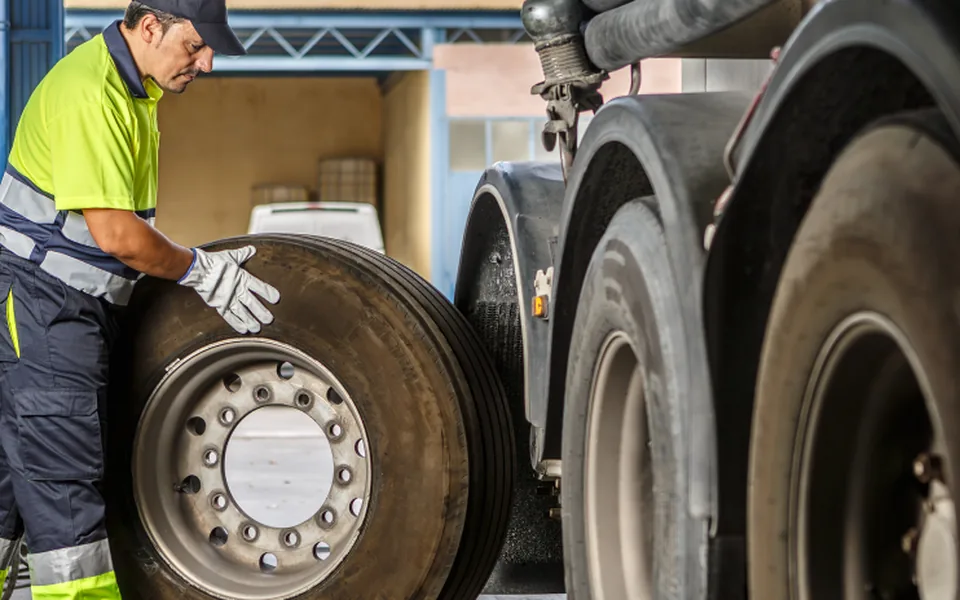
1. Regular Visual Inspections
- Check for visible cracks in the rubber
- Look for signs of dry rot or discoloration
- Examine the tire walls for bulges or damage
- Inspect the tread depth and wear patterns
2. Air Pressure Management
- Check pressure levels monthly
- Maintain manufacturer-recommended PSI
- Adjust pressure based on temperature changes
- Under-inflation leads to premature wear
A spare tire in good condition waits in reserve when you most need it. Proper storage is crucial as well – store your spare in a dry, cool place out of direct sunlight and out of reach of hard chemicals. Such simple maintenance practices preserve your spare tire’s structural integrity and have it ready to serve in emergencies.
Special Considerations for Off-Road and Heavy-Duty Use
Off-road driving stresses your spare tire too much – even when it’s not being used. The harsh realities of rough terrain driving create unique challenges for tire maintenance:
1. Extreme Temperature Exposure
- Direct sunlight accelerates rubber degradation
- Heat from brake systems and engine components
- Rapid temperature changes between day/night cycles
2. Environmental Hazards
- Chemical exposure from road treatments
- Rock and debris impacts
- Mud and moisture accumulation
Believe it or not, your spare tire faces these same environmental stresses as your mounted tires. The standard 6-7 year replacement guideline might need adjustment based on your operating conditions. Heavy-duty applications in challenging environments often require more frequent spare tire replacements – some operators opt for 4-5 year cycles to maintain optimal safety standards.
It becomes important to maintain a rigorous inspection schedule if your truck regularly crosses rugged terrain. Inspect your spare tire at least once a month, with a special focus on sidewall status and mounting bases where damage will first manifest.
When it comes to spare tires for your 18-wheeler, size matters. Temporary “donut” spares have restrictive limits that render them unsuitable for most 18-wheelers. Smaller tires can only be driven at top speeds of 50-60 miles per hour and are designed only for short distances. Less stable and loaded with less weight, they simply can’t handle the stress and weight demands of an equalized semi-truck responsibly. This means temporary spares are not the best for long-distance highway driving or heavy use, and full-size spares are ideal for commercial trucks.
Full-size spares give a great benefit to semi trucks. Spares are the same size as your truck’s standard tires, so they will support the truck’s maximum load capacity and provide normal driving speeds. This allows for extra long-distance driving when necessary and allows for correct vehicle balance and performance.
Your 18-wheeler needs a heavy-duty full-size spare tire that can handle heavy loads and travel under stable conditions at highway speed. A temporary spare will work for a passenger car, but commercial trucks need heavy-duty standby wheels that can travel under stressful conditions. A full-size spare ensures you can continue your route safely until you reach a service location for a permanent replacement.
Additional Support Services for Truck Owners
Your spare tire maintenance plan needs reliable backup support. At Superior Truck and Trailer Repair, we’ve got you covered with comprehensive services designed to keep you moving:
24/7 Emergency Response
- Round-the-clock roadside assistance
- Mobile repair services that come to your location
- No distance limitations – we’ll reach you wherever you are
Professional Support Network
- Expert technicians ready to handle tire-related emergencies
- Rapid response times to minimize costly downtime
- Complete diagnostic and repair capabilities on-site
Towing Solutions
- Direct towing services for light and medium-duty trucks
- Strategic partnerships with industry leaders for heavy-duty towing needs
- Seamless coordination for complex recovery situations
We understand that even with perfect tire maintenance, unexpected situations can arise. Our comprehensive support services work alongside your preventive maintenance efforts to create a complete safety net for your trucking operations.
Choose Superior Truck Trailer Repair
Your 18-wheeler spare tire is going to need to be replaced every 6-7 years – this advice is not a simple recommendation, but a safety mandate. Regular maintenance and regular inspections guard your investment and get your spare tire ready to roll when you absolutely need it to.
We’re here 24/7 to work on your truck maintenance needs. Whether it’s expert guidance required for changing your spare tire, semi truck repair, diesel engine service, or even emergency roadside assistance, our Superior Truck and Trailer Repair team has you covered.
Ready to ensure your spare tire is road-worthy? Call us at (502) 789-6644 – we’ll help keep your truck running safely and reliably, mile after mile.